
Introduction
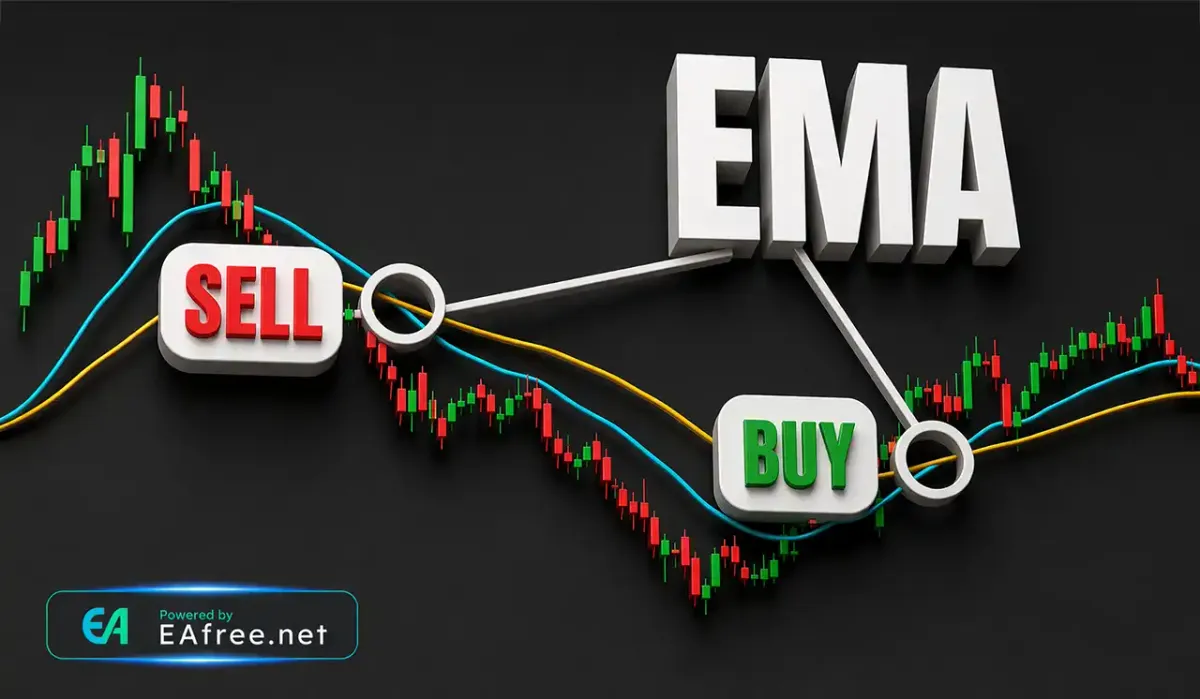
In the world of technical analysis, moving averages are among the most widely used tools for identifying trends and making informed trading decisions. One of the most powerful and responsive types of moving averages is the Exponential Moving Average (EMA). Whether you are trading stocks, forex, or cryptocurrencies, understanding EMA can significantly enhance your ability to read the market.
This comprehensive beginner’s guide will walk you through everything you need to know about EMA—from its definition and calculation to practical strategies and common mistakes to avoid.
What is Exponential Moving Average (EMA)?
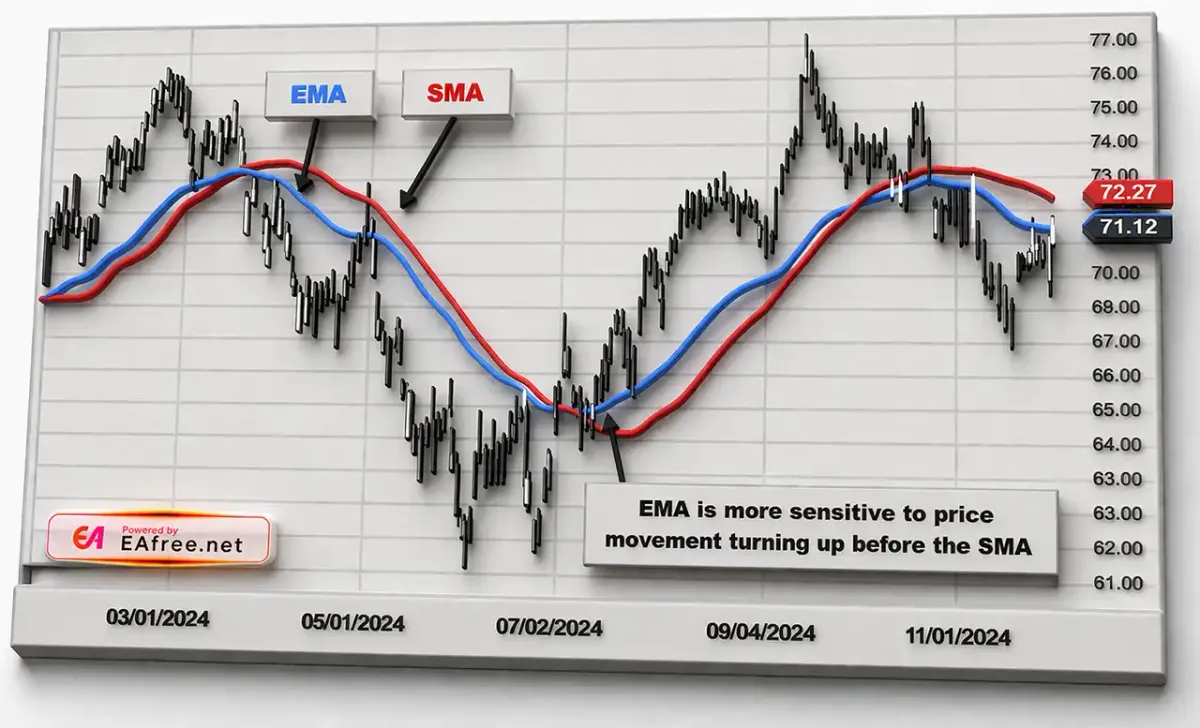
The Exponential Moving Average (EMA) is a type of moving average that gives greater weight to the most recent price data. Unlike the Simple Moving Average (SMA), which treats all data points equally, EMA reacts more quickly to price changes.
This responsiveness makes EMA particularly useful for traders who want to capture short-term trends or react faster to market movements.
//Key Characteristics of EMA:
- Gives more importance to recent prices
- Reacts faster than SMA
- Helps identify trend direction
- Useful for both short-term and long-term trading
How Does EMA Work?
EMA works by applying a smoothing factor (also known as a multiplier) to the most recent price. This ensures that newer data has a stronger influence on the average.
//EMA Formula:
EMA = (Current Price × Multiplier) + (Previous EMA × (1 - Multiplier))
Where:
- Multiplier = 2 ÷ (Period + 1)
For example:
- For a 10-day EMA → Multiplier = 2 ÷ (10 + 1) = 0.1818
This means about 18.18% weight is given to the latest price.
EMA vs SMA: What’s the Difference?
Understanding the difference between EMA and SMA is essential for beginners.
| Feature | EMA | SMA |
|---|---|---|
| Sensitivity | High | Low |
| Reaction Speed | Fast | Slow |
| Weight Distribution | More weight on recent data | Equal weight |
| Best Use | Short-term trading | Long-term trends |
//Summary:
- Use EMA when you want quicker signals
- Use SMA when you prefer smoother, more stable trends
Why Use EMA in Trading?
EMA is widely used because it provides a more accurate reflection of current market conditions.
//Benefits of EMA:
- Faster Trend Detection
EMA helps traders identify trends earlier than SMA.
2. Better Entry and Exit Signals
Due to its responsiveness, EMA can signal potential trade opportunities sooner.
3. Versatility
Works across different markets: stocks, forex, crypto.
4. Reduces Lag
Compared to SMA, EMA reduces delay in reacting to price changes.
Common EMA Periods
Different EMA periods serve different trading styles.
//Short-Term EMAs:
- 5 EMA
- 9 EMA
- 12 EMA
Used for:
- Scalping
- Day trading
//Medium-Term EMAs:
- 20 EMA
- 50 EMA
Used for:
- Swing trading
//Long-Term EMAs:
- 100 EMA
- 200 EMA
Used for:
- Identifying major trends
- Long-term investing
Popular EMA Trading Strategies
//1. EMA Crossover Strategy
This is one of the most popular EMA-based strategies.
How it works:
- Use two EMAs (e.g., 9 EMA and 21 EMA)
- When the shorter EMA crosses above the longer EMA → Buy signal
- When it crosses below → Sell signal
Why it works:
It captures momentum shifts early.
//2. EMA Trend Following Strategy
This strategy helps traders follow the overall market trend.
Steps:
- Use a 50 EMA or 200 EMA
- If price is above EMA → Uptrend
- If price is below EMA → Downtrend
Tip:
Only take trades in the direction of the trend.
//3. EMA Support and Resistance
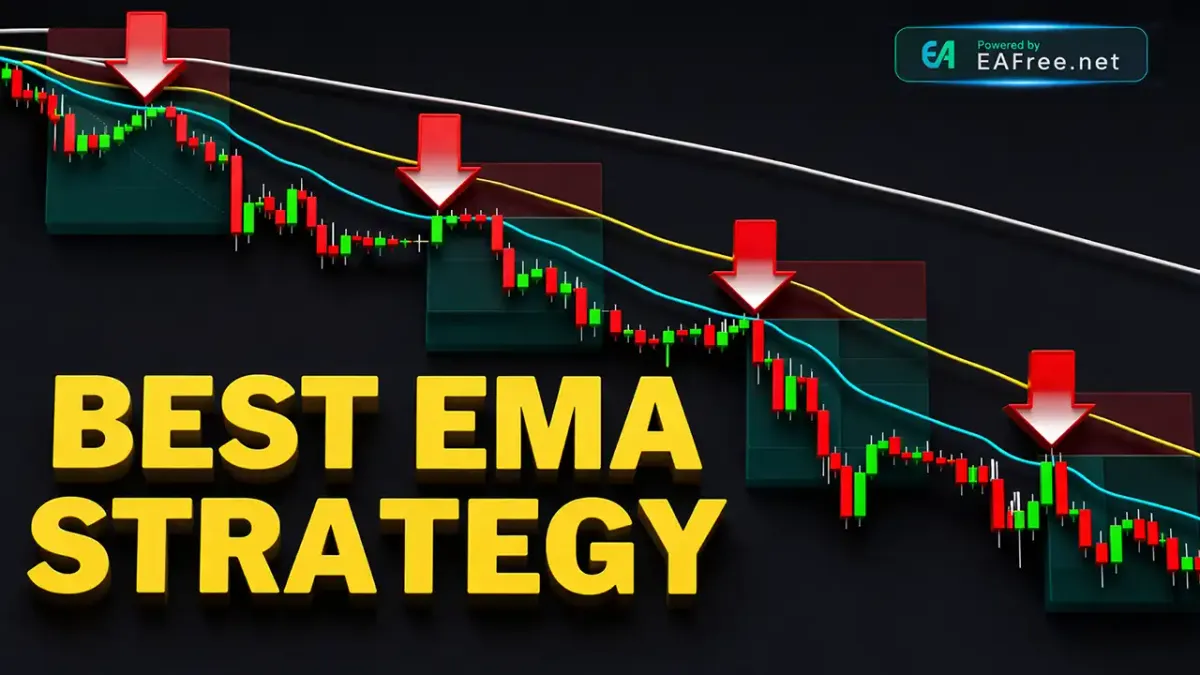
EMA can act as dynamic support or resistance.
- In an uptrend → EMA acts as support
- In a downtrend → EMA acts as resistance
This helps traders find better entry points.
//4. Triple EMA Strategy
This strategy uses three EMAs:
- Short-term (e.g., 9 EMA)
- Medium-term (e.g., 21 EMA)
- Long-term (e.g., 50 EMA)
Signal:
- All EMAs aligned upward → Strong uptrend
- All EMAs aligned downward → Strong downtrend
How to Use EMA Effectively
To maximize the effectiveness of EMA, consider the following tips:
//1. Combine with Other Indicators
EMA works best when used with:
//2. Adjust Timeframes
- Short timeframe → More signals but more noise
- Long timeframe → Fewer signals but more reliable
//3. Avoid Sideways Markets
EMA performs poorly in ranging markets because it generates false signals.
Common Mistakes Beginners Make
//1. Using EMA Alone
Relying solely on EMA can lead to poor decisions. Always confirm with other indicators.
//2. Choosing Wrong Periods
Using inappropriate EMA periods for your strategy can reduce effectiveness.
//3. Ignoring Market Context
EMA signals should always be interpreted within the broader market trend.
//4. Overtrading
Frequent EMA signals can tempt beginners to trade too often.
EMA in Different Markets
//1. Stock Market
EMA helps identify momentum and trend reversals in equities.
//2. Forex Market
Widely used for short-term trading due to high volatility.
//3. Cryptocurrency Market
Highly effective because crypto markets move quickly and require responsive indicators.
Advantages and Disadvantages of EMA
//Advantages:
- Quick response to price changes
- Useful for short-term trading
- Easy to understand and apply
//Disadvantages:
- Can produce false signals
- Less reliable in sideways markets
- Requires confirmation from other tools
EMA vs Other Indicators
While EMA is powerful, it should not be used in isolation.
//Compared to RSI:
- EMA shows trend
- RSI shows overbought/oversold conditions
//Compared to MACD:
- EMA is simpler
- MACD provides more detailed momentum analysis
Practical Example
Imagine you are analyzing a stock chart:
- You apply a 20 EMA
- The price consistently stays above the EMA
- Pullbacks touch the EMA and bounce back
This indicates a strong uptrend and potential buying opportunities.
Final Thoughts
The Exponential Moving Average (EMA) is an essential tool for any beginner trader. Its ability to respond quickly to price changes makes it invaluable for identifying trends, spotting entry points, and improving overall trading performance.
However, like any indicator, EMA is not perfect. The key to success lies in combining EMA with other tools, understanding market conditions and practicing disciplined trading.