
In the fast-paced world of Forex trading, timing is everything. Entering the market at the right moment can significantly impact your profitability. While many traders rely on market orders to execute trades instantly, experienced traders often use pending orders to gain more control and precision over their entries.
In this comprehensive guide, you’ll learn what pending orders are, the different types available, and how to use them strategically to improve your Forex trading performance.
What Are Pending Orders in Forex?
A pending order is an instruction you give your broker to open a trade at a specific price level in the future, rather than executing it immediately at the current market price.
This allows traders to:
- Plan trades in advance
- Avoid emotional decision-making
- Enter the market at optimal price levels
- Trade even when not actively watching charts
Pending orders are especially useful in volatile markets where price moves quickly and opportunities can be missed.
Types of Pending Orders
There are four main types of pending orders in Forex. Each serves a different purpose depending on your trading strategy.
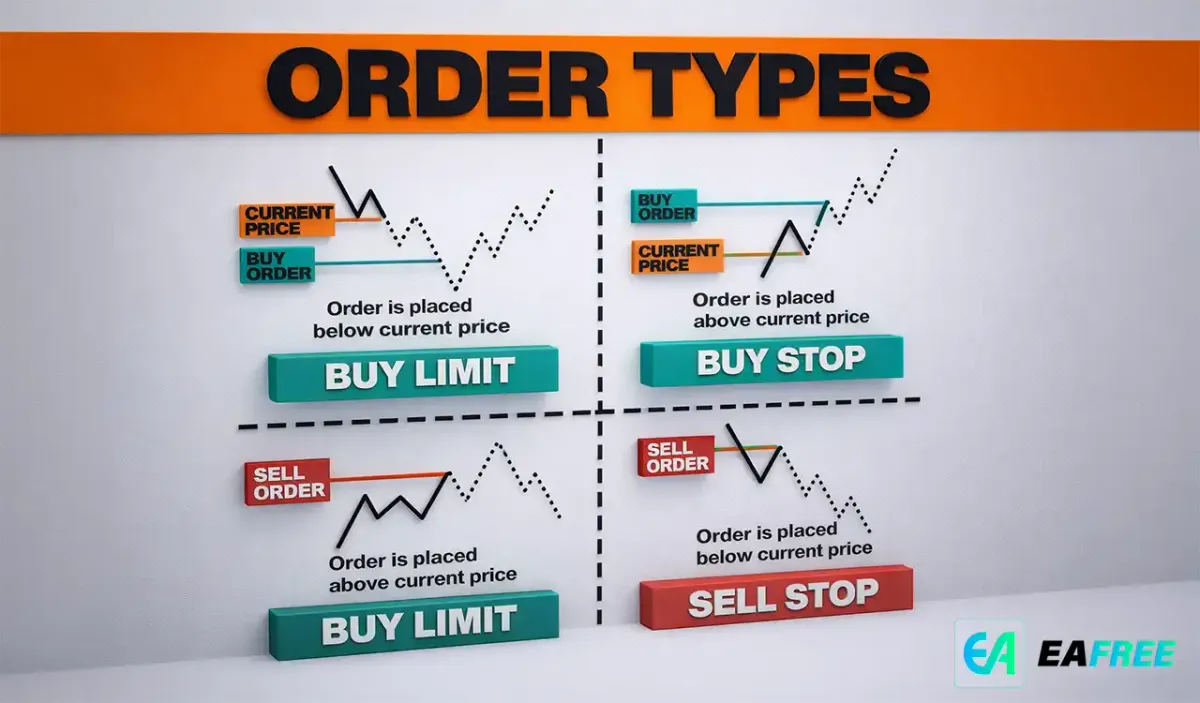
//1. Buy Limit Order
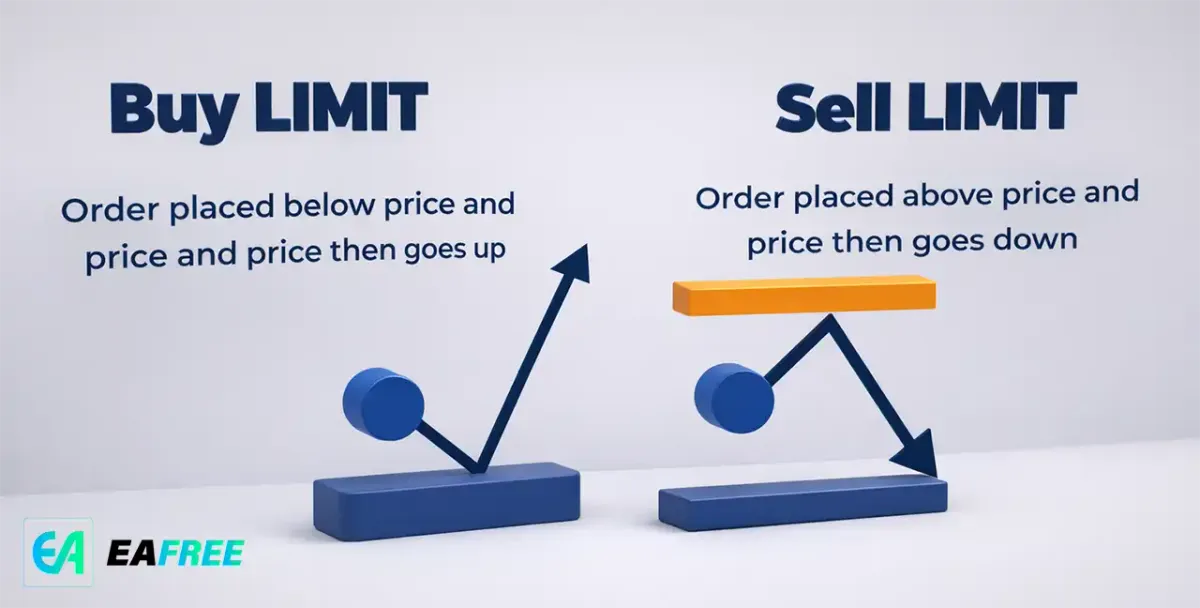
A Buy Limit order is placed below the current market price. It is used when you expect the price to drop to a certain level and then rise.
Example:
- EUR/USD is currently at 1.1000
- You place a Buy Limit at 1.0950
- The order triggers when price drops to 1.0950
Best for: Buying at support levels
//2. Sell Limit Order
A Sell Limit order is placed above the current price. It is used when you expect the price to rise to a certain level and then fall.
Example:
- GBP/USD is at 1.2500
- You place a Sell Limit at 1.2550
Best for: Selling at resistance levels
//3. Buy Stop Order
A Buy Stop order is placed above the current price. It triggers when the price continues rising, confirming an upward trend.
Example:
- USD/JPY is at 110.00
- You place a Buy Stop at 110.50
Best for: Breakout trading
//4. Sell Stop Order
A Sell Stop order is placed below the current price. It activates when price continues falling.
Example:
- AUD/USD is at 0.7000
- You place a Sell Stop at 0.6950
Best for: Downward breakouts
Why Use Pending Orders?
Using pending orders offers several advantages over market orders:
//1. Better Entry Precision
You can define exact entry points based on technical analysis rather than reacting to price movements.
//2. Emotional Control
Pending orders eliminate impulsive decisions caused by fear or greed.
//3. Time Efficiency
You don’t need to monitor charts constantly. Your trade executes automatically when conditions are met.
//4. Strategic Trading
You can align entries with key levels such as:
- Support and resistance
- Fibonacci retracements
- Trendlines
How to Use Pending Orders Effectively
To maximize the benefits of pending orders, you need a structured approach. Here’s how:
//Step 1: Identify Key Levels
Start by analyzing your charts to find strong support and resistance zones. These are ideal areas for placing limit orders.
- Use higher timeframes (H4, Daily)
- Look for repeated price reactions
- Combine with indicators if needed
//Step 2: Choose the Right Order Type
Match your market expectation with the correct pending order:
| Market Expectation | Order Type |
|---|---|
| Price will retrace then reverse upward | Buy Limit |
| Price will retrace then reverse downward | Sell Limit |
| Price will break upward | Buy Stop |
| Price will break downward | Sell Stop |
//Step 3: Set Stop Loss and Take Profit
Never place a pending order without risk management.
- Stop Loss: Protects your capital
- Take Profit: Locks in gains
A common risk-reward ratio is 1:2 or 1:3.
//Step 4: Confirm with Price Action
Before placing your order, look for confirmation signals:
- Candlestick patterns (pin bar, engulfing)
- Break and retest
- Momentum shifts
//Step 5: Avoid Over-Trading
Just because pending orders are easy to set doesn’t mean you should place too many.
Focus on:
- High-probability setups
- Clean chart structures
- Clear trends
Common Strategies Using Pending Orders
//1. Support and Resistance Strategy
Place Buy Limit orders at support and Sell Limit orders at resistance.
Why it works:
Markets often respect these levels due to historical price behavior.
//2. Breakout Strategy
Use Buy Stop and Sell Stop orders to catch strong market moves.
Tip:
Place orders slightly above/below key levels to avoid false breakouts.
//3. Trend Trading Strategy
In trending markets:
- Use Buy Limit in an uptrend (buy dips)
- Use Sell Limit in a downtrend (sell rallies)
//4. News Trading Strategy
Pending orders can help you capitalize on volatility during economic news releases.
- Place Buy Stop and Sell Stop on both sides of price
- Cancel the opposite order once one is triggered
Common Mistakes to Avoid
Even though pending orders are powerful, many traders misuse them. Here are some pitfalls:
//1. Placing Orders Too Close to Market Price
This can lead to premature triggering due to normal market noise.
//2. Ignoring Market Context
Always consider:
- Trend direction
- Market structure
- Economic events
//3. Poor Risk Management
Never risk more than 1–2% of your trading capital per trade.
//4. Not Adjusting Orders
Market conditions change. Be ready to modify or cancel pending orders if setups become invalid.
Pro Tips for Better Entry Points
- Combine pending orders with multi-timeframe analysis
- Use confluence zones (e.g., support + Fibonacci)
- Backtest your strategy before going live
- Keep a trading journal to track performance
Conclusion
Pending orders are a powerful tool that can significantly improve your Forex trading precision and discipline. Instead of chasing the market, you let the market come to you.
By understanding the different types of pending orders and applying them strategically, you can:
- Enter trades at optimal price levels
- Reduce emotional trading
- Improve your overall consistency
Whether you’re a beginner or an experienced trader, mastering pending orders is a key step toward becoming more professional and profitable in Forex trading.
FAQ
//Are pending orders suitable for beginners?
Yes. They help beginners trade with discipline and reduce emotional mistakes.
//Do pending orders guarantee better profits?
No strategy guarantees profits, but pending orders improve entry precision, which can enhance performance.
//Can I cancel a pending order?
Yes. You can modify or cancel pending orders anytime before they are triggered.
//Which is better: market orders or pending orders?
Both have their place. However, pending orders are better for planned, strategic entries.