
Introduction
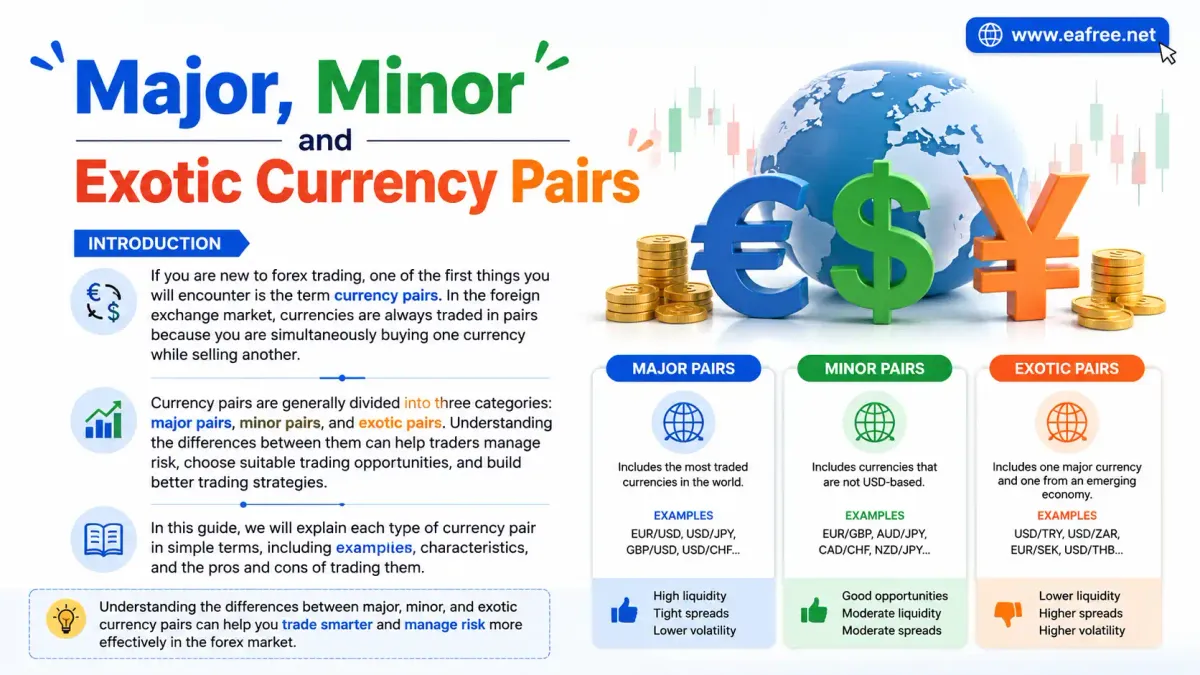
If you are new to forex trading, one of the first things you will encounter is the term currency pairs. In the foreign exchange market, currencies are always traded in pairs because you are simultaneously buying one currency while selling another.
Currency pairs are generally divided into three categories: major pairs, minor pairs and exotic pairs. Understanding the differences between them can help traders manage risk, choose suitable trading opportunities and build better trading strategies.
In this guide, we will explain each type of currency pair in simple terms, including examples, characteristics, and the pros and cons of trading them.
What are Currency Pairs?
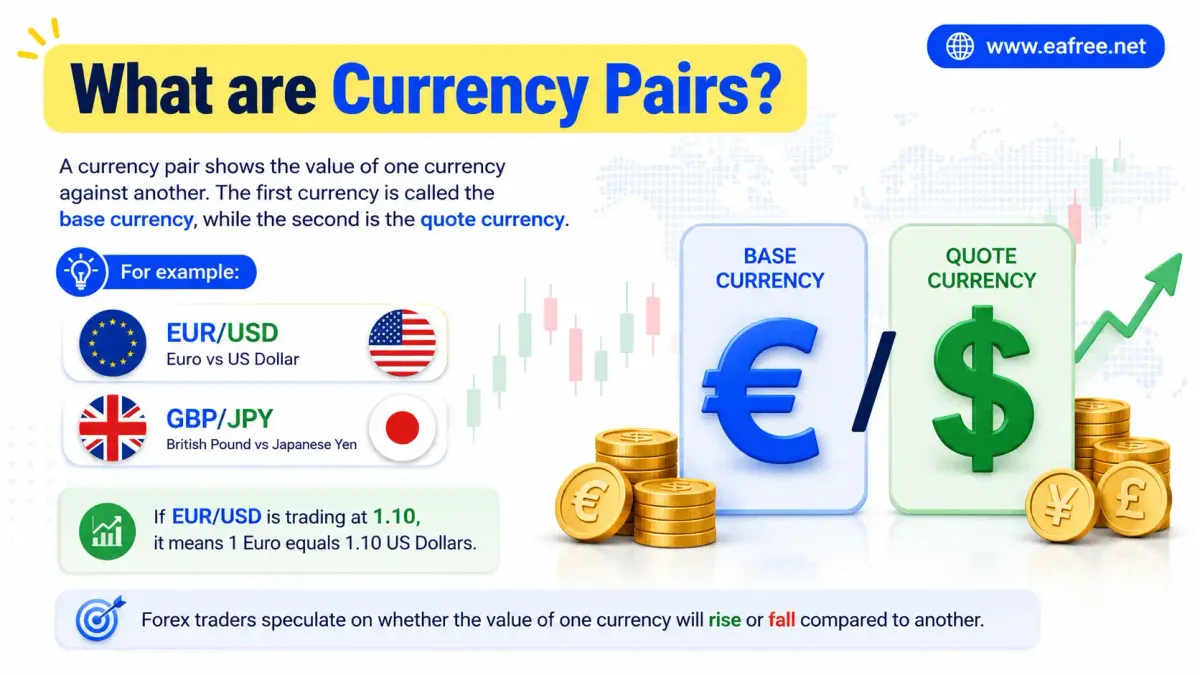
A currency pair shows the value of one currency against another. The first currency is called the base currency, while the second is the quote currency.
For example:
- EUR/USD = Euro vs US Dollar
- GBP/JPY = British Pound vs Japanese Yen
If EUR/USD is trading at 1.10, it means 1 Euro equals 1.10 US Dollars.
Forex traders speculate on whether the value of one currency will rise or fall compared to another.
Major Currency Pairs
Major currency pairs are the most traded pairs in the forex market. These pairs always include the US Dollar (USD) and one other major global currency.
//Common Examples of Major Pairs
| Major Pair | Currency Names |
|---|---|
| EUR/USD | Euro / US Dollar |
| GBP/USD | British Pound / US Dollar |
| USD/JPY | US Dollar / Japanese Yen |
| USD/CHF | US Dollar / Swiss Franc |
| AUD/USD | Australian Dollar / US Dollar |
| USD/CAD | US Dollar / Canadian Dollar |
| NZD/USD | New Zealand Dollar / US Dollar |
Major pairs are popular because they have high liquidity, tight spreads, and large trading volumes. This means traders can usually enter and exit positions quickly with lower transaction costs.
//Why Traders Prefer Major Pairs
Most beginner traders start with major pairs because they are easier to analyze and generally more stable than exotic pairs. Economic news from countries like the United States, the Eurozone, Japan, and the United Kingdom heavily influences these markets.
Key advantages include:
- Lower spreads
- High liquidity
- More market information available
- Easier technical analysis
However, major pairs can still experience volatility during major economic events such as interest rate decisions or inflation reports.
Minor Currency Pairs
Minor currency pairs, also called cross-currency pairs, do not include the US Dollar. Instead, they involve two major global currencies traded against each other.
//Common Examples of Minor Pairs
| Minor Pair | Currency Names |
|---|---|
| EUR/GBP | Euro / British Pound |
| EUR/JPY | Euro / Japanese Yen |
| GBP/JPY | British Pound / Japanese Yen |
| AUD/JPY | Australian Dollar / Japanese Yen |
| CHF/JPY | Swiss Franc / Japanese Yen |
Minor pairs are less traded compared to major pairs, but they still offer strong liquidity and trading opportunities.
//Characteristics of Minor Pairs
Minor pairs often move differently from major pairs because they are influenced by the economies of two countries instead of the US economy.
For example:
- EUR/GBP reacts to European and UK economic news
- AUD/JPY is heavily affected by market risk sentiment and commodity prices
Minor pairs can sometimes offer larger price movements than major pairs, which may attract short-term traders looking for volatility.
//Pros and Cons of Trading Minor Pairs
Pros
- Good trading opportunities
- Less direct dependence on the US Dollar
- Can provide strong trends
Cons
- Wider spreads than major pairs
- Slightly lower liquidity
- Can be more volatile
Exotic Currency Pairs
Exotic currency pairs consist of one major currency and one currency from a developing or smaller economy.
//Common Examples of Exotic Pairs
| Exotic Pair | Currency Names |
|---|---|
| USD/TRY | US Dollar / Turkish Lira |
| USD/ZAR | US Dollar / South African Rand |
| USD/MXN | US Dollar / Mexican Peso |
| EUR/TRY | Euro / Turkish Lira |
| USD/SGD | US Dollar / Singapore Dollar |
Exotic pairs are much less liquid compared to major and minor pairs. They are often affected by political instability, economic uncertainty, and lower trading volumes.
//Why Exotic Pairs Are Riskier
Exotic currency pairs tend to have:
- Wider spreads
- Sudden price swings
- Lower liquidity
- Higher trading costs
For example, political events or economic crises in emerging markets can cause extreme volatility in exotic currencies.
Because of this, exotic pairs are usually more suitable for experienced traders who understand risk management.
//Potential Benefits of Exotic Pairs
Despite the higher risks, some traders are attracted to exotic pairs because they can offer:
- Large price movements
- Unique market opportunities
- Higher profit potential
However, the increased risk means traders should use smaller position sizes and proper stop-loss strategies.
Key Differences Between Major, Minor, and Exotic Pairs
| Feature | Major Pairs | Minor Pairs | Exotic Pairs |
|---|---|---|---|
| Includes USD | Yes | No | Usually Yes |
| Liquidity | Very High | High | Low |
| Spread Size | Low | Medium | High |
| Volatility | Moderate | Moderate to High | High |
| Risk Level | Lower | Medium | Higher |
| Suitable for Beginners | Yes | Yes | Usually No |
This comparison helps traders understand which currency pairs best match their experience level and trading goals.
Which Currency Pair Type Should Beginners Trade?
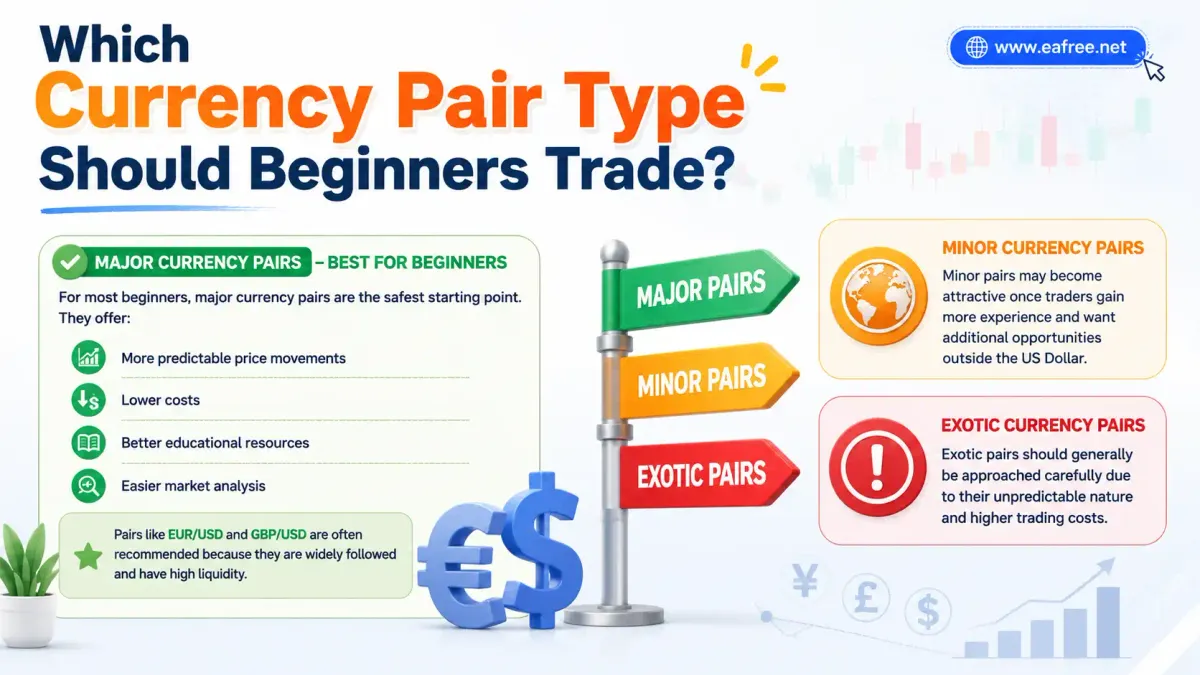
For most beginners, major currency pairs are the safest starting point. They offer:
- More predictable price movements
- Lower costs
- Better educational resources
- Easier market analysis
Pairs like EUR/USD and GBP/USD are often recommended because they are widely followed and have high liquidity.
Minor pairs may become attractive once traders gain more experience and want additional opportunities outside the US Dollar.
Exotic pairs should generally be approached carefully due to their unpredictable nature and higher trading costs.
Tips for Choosing Currency Pairs
Choosing the right currency pair depends on your trading style, risk tolerance, and market knowledge.
Here are a few practical tips:
//Focus on Liquidity
Highly liquid pairs usually have lower spreads and smoother price action.
//Understand Market Hours
Some pairs move more actively during certain trading sessions. For example, EUR/USD is often most active during the London and New York sessions.
//Follow Economic News
Economic indicators such as inflation, employment, and interest rates can strongly impact currency prices.
//Avoid Overtrading
Beginners should focus on a small number of pairs instead of trying to trade everything at once.
Conclusion
Understanding the difference between major, minor, and exotic currency pairs is essential for anyone entering the forex market.
- Major pairs are the most liquid and beginner-friendly.
- Minor pairs offer additional opportunities without involving the US Dollar.
- Exotic pairs can provide large movements but come with higher risks and costs.
By learning how each type behaves, traders can choose currency pairs that fit their experience level and trading strategy more effectively.
FAQs
❓ What is the most traded currency pair in forex?
EUR/USD is the most traded currency pair because it has the highest liquidity and tight spreads.
❓ Are minor currency pairs good for beginners?
Yes, some minor pairs can be suitable for beginners, but they are usually slightly more volatile than major pairs.
❓ Why are exotic currency pairs risky?
Exotic pairs often have lower liquidity, wider spreads, and stronger price volatility caused by economic or political instability.
❓ Do all major currency pairs include the US Dollar?
Yes, every major currency pair includes the US Dollar combined with another major currency.
❓ Which currency pairs have the lowest spreads?
Major pairs like EUR/USD, USD/JPY, and GBP/USD typically have the lowest spreads due to high trading volume.