

Introduction
The Forex market is one of the most liquid and dynamic financial markets in the world, attracting millions of traders globally. However, many beginners struggle to achieve consistent profitability due to a lack of understanding of how the market truly operates. This is where Smart Money Concepts (SMC) come into play.
Smart Money Concepts focus on understanding the behavior of institutional traders—banks, hedge funds, and large financial entities—often referred to as “smart money.” Unlike retail traders, these institutions have the capital and influence to move markets. By learning how they operate, retail traders can align their strategies with the real drivers of price action.
In this comprehensive beginner’s guide, we will explore what SMC is, its core principles, key components and how you can start applying it in your Forex trading journey.
What Are Smart Money Concepts (SMC)?
Smart Money Concepts (SMC) is a trading methodology that analyzes market structure, liquidity, and price behavior to identify where institutional players are entering or exiting trades.
Traditional retail trading often relies on indicators such as RSI, MACD or Moving Averages. In contrast, SMC focuses on price action and liquidity, aiming to answer one key question:
Where is the smart money positioning itself?
By identifying these areas, traders can follow the footprints of institutions rather than trading blindly.

Why Smart Money Matters in Forex
The Forex market is not random. It is heavily influenced by large institutions that execute massive orders. These orders cannot be placed all at once without affecting price, so institutions strategically accumulate and distribute positions over time.
//Key reasons why smart money dominates:
- High capital power: Institutions control billions of dollars.
- Access to insider-level data and analytics.
- Ability to manipulate liquidity zones.
Retail traders often become liquidity for these institutions. Understanding SMC helps you avoid being on the wrong side of the market.
Core Principles of Smart Money Concepts
To effectively use SMC, you need to understand its foundational principles.
//1. Market Structure
Market structure refers to the pattern of highs and lows in price movement.
- Bullish structure: Higher highs (HH) and higher lows (HL)
- Bearish structure: Lower highs (LH) and lower lows (LL)
A break in structure (BOS) signals a potential shift in market direction.
//2. Liquidity
Liquidity is one of the most important concepts in SMC.
Liquidity exists where traders place stop-loss orders:
- Above equal highs.
- Below equal lows.
- Around key support and resistance levels.
Institutions often hunt liquidity before making major moves.
//3. Order Blocks
Order blocks are areas where institutions have placed large buy or sell orders.
- Bullish order block: Last bearish candle before a strong upward move
- Bearish order block: Last bullish candle before a strong downward move
These zones act as key entry points for trades.
//4. Fair Value Gap (FVG)
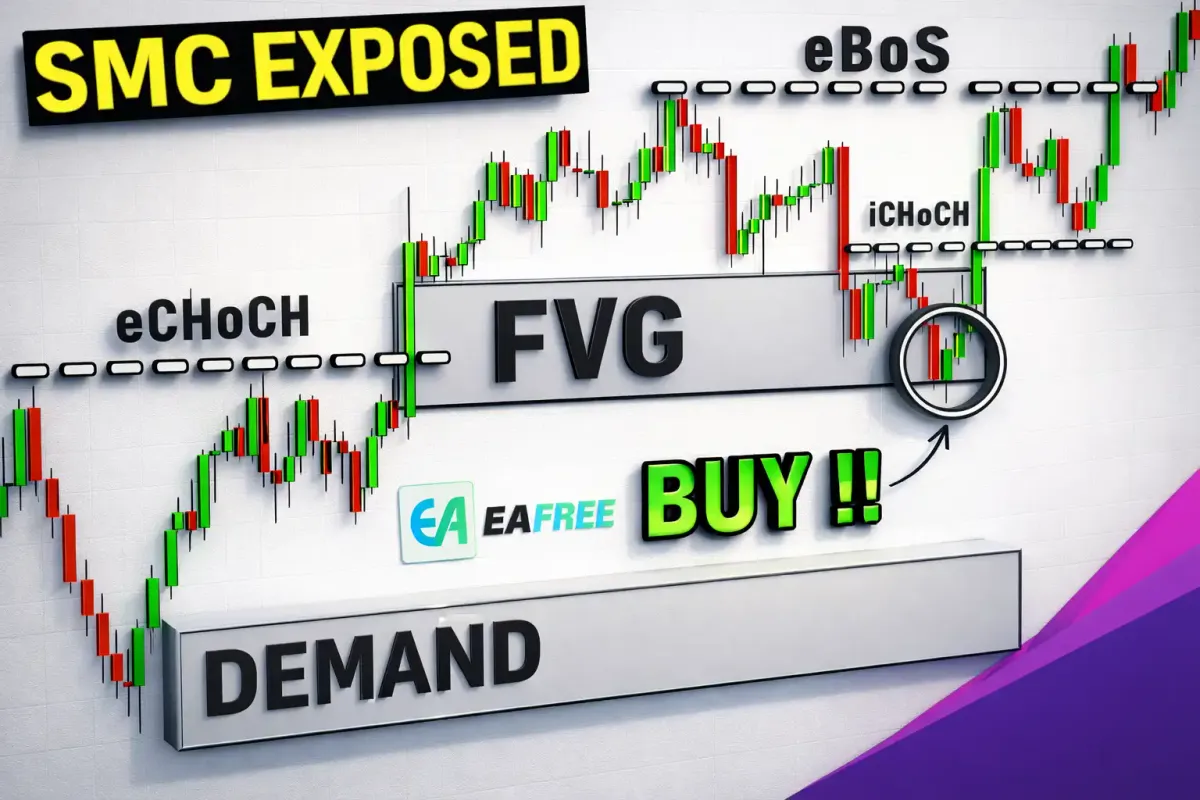
A Fair Value Gap is an imbalance in the market where price moves quickly, leaving a gap between candles.
Price often returns to these gaps to “rebalance” before continuing in the original direction.
//5. Break of Structure (BOS) and Change of Character (CHOCH)
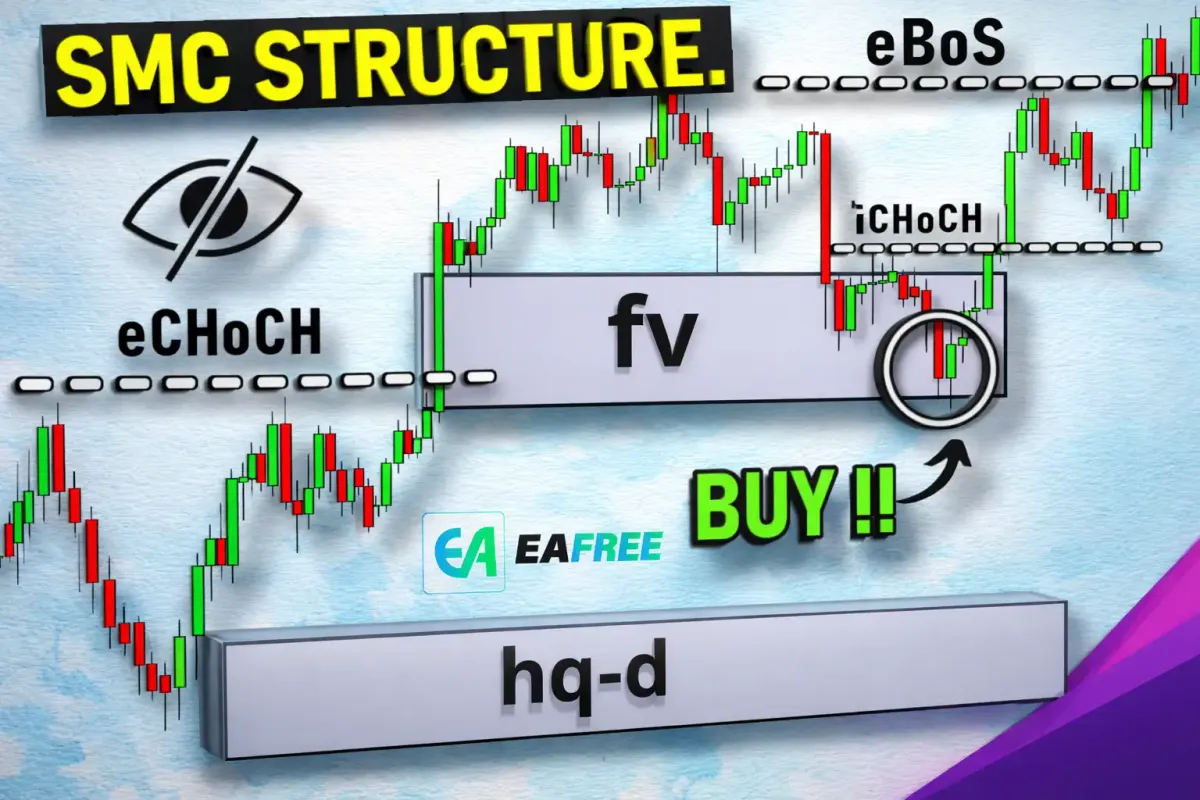
- BOS (Break of Structure): Confirms trend continuation.
- CHOCH (Change of Character): Signals potential trend reversal.
Understanding the difference between these two is crucial for timing entries.
How Smart Money Manipulates the Market
One of the most eye-opening aspects of SMC is recognizing how the market is manipulated.
//Common manipulation tactics:
- Stop Hunts
Institutions push price beyond key levels to trigger stop losses before reversing.
- False Breakouts
Retail traders enter on breakout signals, only to see price reverse sharply.
- Liquidity Sweeps
Price briefly moves into liquidity zones before continuing in the intended direction.
Key SMC Trading Strategy (Step-by-Step)
Here is a simple beginner-friendly SMC strategy:
//Step 1: Identify Market Structure
Determine whether the market is bullish or bearish.
//Step 2: Mark Liquidity Zones
Look for equal highs/lows and areas with clustered stop losses.
//Step 3: Wait for Liquidity Sweep
Allow price to take out liquidity before entering.
//Step 4: Identify Order Block or FVG
Find institutional zones where price is likely to react.
//Step 5: Confirm Entry with BOS or CHOCH
Wait for confirmation before entering a trade.
//Step 6: Manage Risk
Always use stop-loss and proper risk management (1–2% per trade).
Advantages of Smart Money Concepts
SMC offers several benefits over traditional trading methods:
- Better understanding of market behavior.
- Improved entry precision.
- Higher probability setups.
- Reduced reliance on lagging indicators.
Common Mistakes Beginners Make with SMC
While SMC is powerful, beginners often misuse it.
//1. Overcomplicating the Strategy
Trying to apply too many concepts at once can lead to confusion.
//2. Ignoring Risk Management
Even the best setups can fail. Risk control is essential.
//3. Trading Without Confirmation
Entering trades too early without BOS or CHOCH confirmation.
//4. Misidentifying Order Blocks
Not all strong candles are valid order blocks.
SMC vs Traditional Technical Analysis
| Feature | SMC | Traditional TA |
|---|---|---|
| Focus | Liquidity & institutions | Indicators |
| Entry precision | High | Medium |
| Complexity | Moderate | Low |
| Reliability | Higher (if applied correctly) | Varies |
SMC provides a deeper understanding of why price moves, not just when.
Tips for Beginners Using SMC
If you're just starting with Smart Money Concepts, keep these tips in mind:
- Start with one concept at a time
- Practice on demo accounts
- Use higher timeframes (H1, H4, Daily)
- Keep a trading journal
- Focus on quality over quantity
Is SMC Suitable for Beginners?
Yes—but with a caveat.
SMC is not a “quick win” strategy. It requires:
- Patience
- Practice
- Strong understanding of price action
However, once mastered, it can significantly improve your trading performance.
Conclusion
Smart Money Concepts (SMC) offer a powerful framework for understanding how the Forex market truly operates. By focusing on institutional behavior, liquidity, and price action, traders can gain a significant edge over traditional methods.
Instead of relying on lagging indicators, SMC teaches you to read the market like professional traders. While it may seem complex at first, consistent practice and disciplined execution can lead to long-term success.
FAQs
//1. What is the main idea behind SMC?
To follow institutional money and trade based on liquidity and market structure.
//2. Is SMC better than indicators?
SMC provides deeper insights, but combining both can be effective.
//3. How long does it take to learn SMC?
It depends on your dedication, but most traders take a few months to grasp the basics.
//4. Can SMC be used in other markets?
Yes, it works in stocks, crypto, and indices as well.