
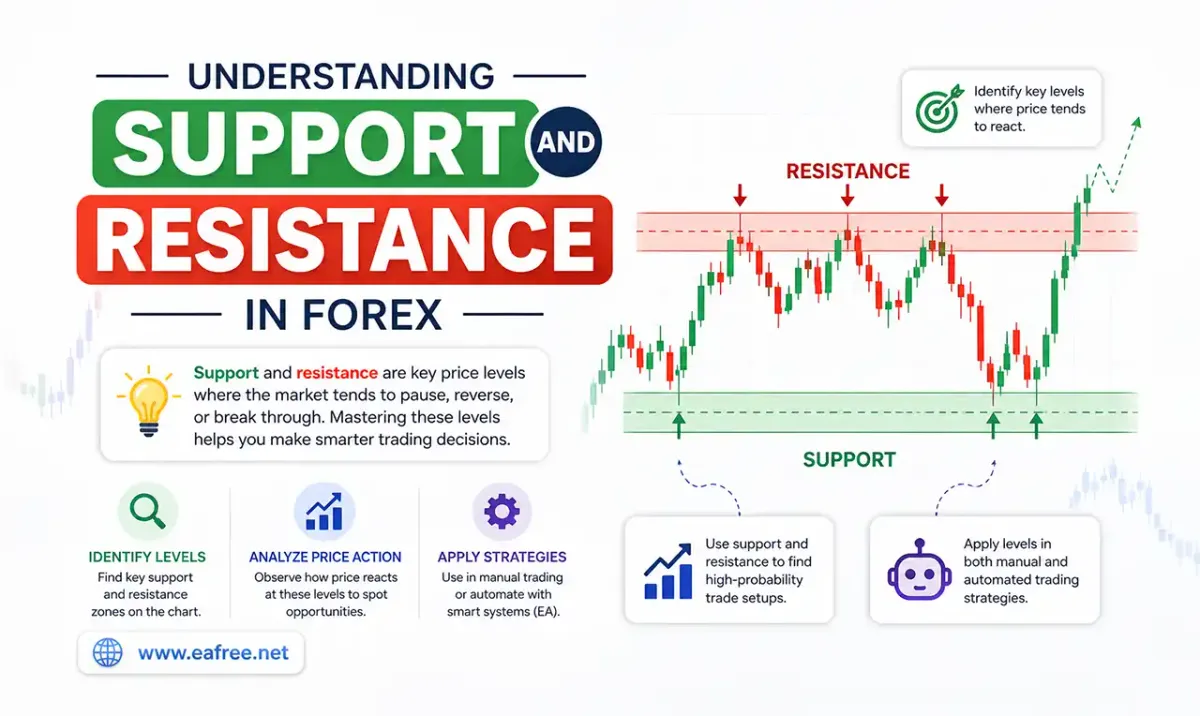
Understanding support and resistance is one of the most fundamental skills in Forex trading. Whether you're a beginner or moving toward automation, these concepts help you interpret price behavior and make better trading decisions. In this guide, we’ll break down what support and resistance are, how to identify them, and how to apply them in both manual and automated trading strategies.
What Are Support and Resistance?
Support and resistance are key price levels on a chart where the market tends to reverse or pause.
- Support is a level where price tends to stop falling and may bounce upward.
- Resistance is a level where price tends to stop rising and may reverse downward.
These levels form because of collective trader psychology—buyers tend to step in at support, while sellers dominate at resistance.
Why Support and Resistance Matter in Forex
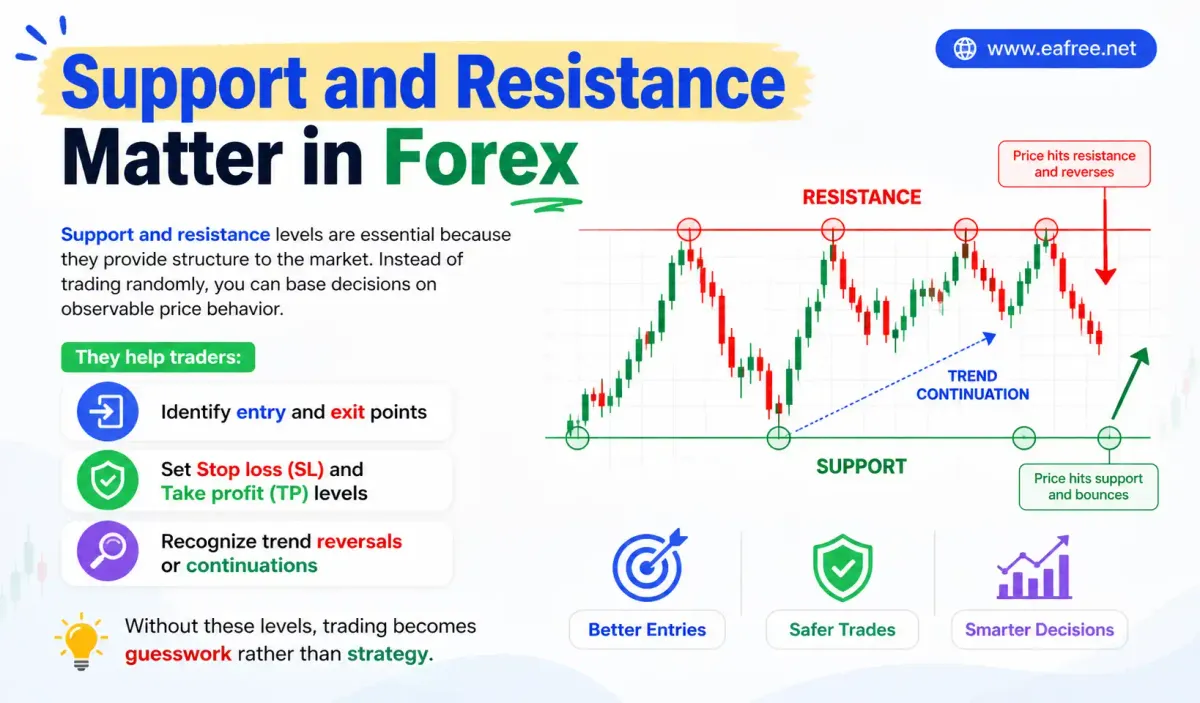
Support and resistance levels are essential because they provide structure to the market. Instead of trading randomly, you can base decisions on observable price behavior.
They help traders:
- Identify entry and exit points
- Set Stop loss (SL) and Take profit (TP) levels
- Recognize trend reversals or continuations
Without these levels, trading becomes guesswork rather than strategy.
How to Identify Support and Resistance Levels
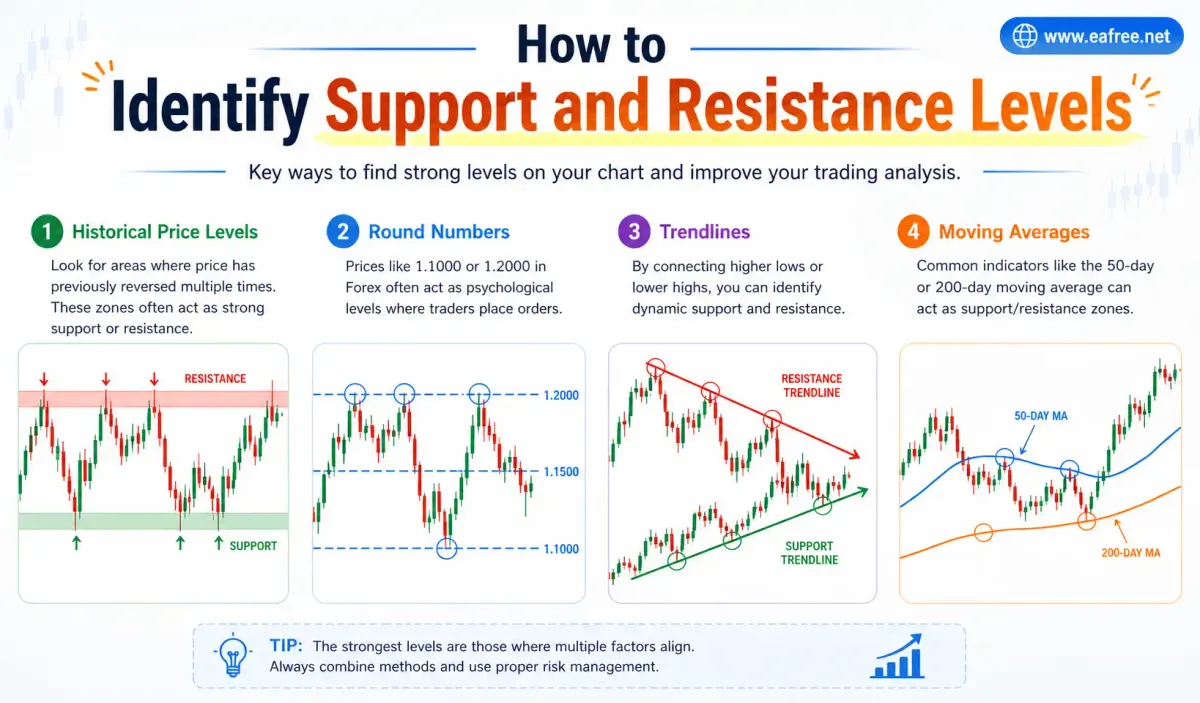
There are several practical ways to identify these levels on a chart:
//🎯 Historical Price Levels
Look for areas where price has previously reversed multiple times. These zones often act as strong support or resistance.
//🎯 Round Numbers
Prices like 1.1000 or 1.2000 in Forex often act as psychological levels where traders place orders.
//🎯 Trendlines
By connecting higher lows or lower highs, you can identify dynamic support and resistance.
//🎯 Moving Averages
Common indicators like the 50-day or 200-day moving average can act as support/resistance zones.
Types of Support and Resistance
Understanding the different types helps refine your trading strategy.
| Type | Description |
|---|---|
| Horizontal Levels | Fixed price zones based on past highs/lows |
| Trendline Levels | Diagonal lines following price trends |
| Dynamic Levels | Moving averages or indicators that shift with price |
| Psychological Levels | Round numbers where traders cluster orders |
Each type provides a slightly different perspective on market behavior.
How Price Reacts to These Levels
Price does not always reverse perfectly at support or resistance—it often behaves in one of three ways:
- Bounce – Price reverses after hitting the level
- Breakout – Price breaks through the level with momentum
- Fakeout – Price briefly breaks the level, then reverses
Understanding these reactions helps you avoid common trading mistakes.
Basic Trading Strategies Using Support and Resistance
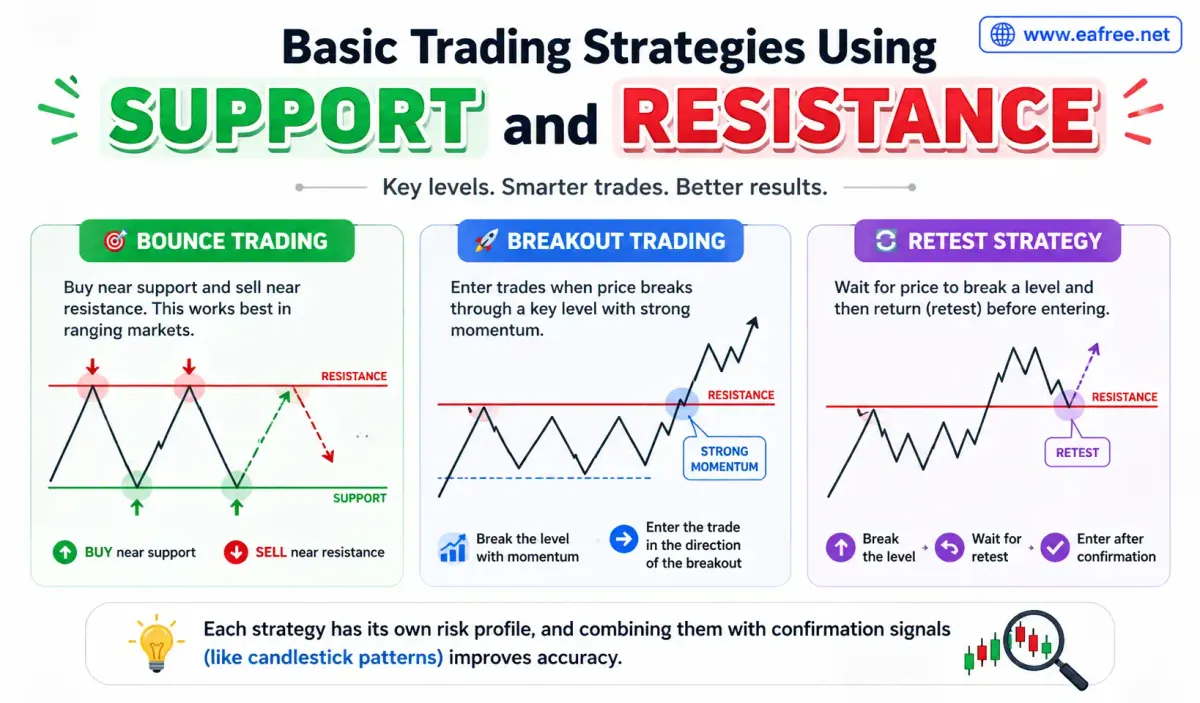
//🎯 Bounce Trading
Buy near support and sell near resistance. This works best in ranging markets.
//🎯 Breakout Trading
Enter trades when price breaks through a key level with strong momentum.
//🎯 Retest Strategy
Wait for price to break a level and then return (retest) before entering.
Each strategy has its own risk profile, and combining them with confirmation signals (like candlestick patterns) improves accuracy.
Common Mistakes Beginners Make
Many traders misuse support and resistance due to misunderstandings:
- Treating levels as exact lines instead of zones
- Ignoring market context (trend vs range)
- Entering trades without confirmation
- Overloading charts with too many levels
Keeping things simple is often more effective.
Example of Automated Strategy Logic
Here’s a simple structure of how support/resistance can be used in a trading bot:
- Identify key levels using recent price data
- Monitor price approaching these levels
- Confirm with indicators (e.g., RSI or volume)
- Execute trade based on predefined rules
- Apply risk management automatically
This reduces emotional decision-making and improves consistency.
Tips for Better Results
To use support and resistance effectively:
- Combine with indicators (RSI, MACD, volume)
- Use multiple timeframes for confirmation
- Focus on high-probability zones
- Backtest strategies before automation
Consistency and discipline matter more than complexity.
Conclusion
Support and resistance are foundational tools in Forex trading. They provide a clear framework for understanding price movement and making informed decisions. Whether you're trading manually or building automated systems, mastering these levels can significantly improve your performance.
As you progress, consider integrating support and resistance into algorithmic strategies. Automation not only enhances efficiency but also removes emotional bias—one of the biggest challenges in trading.
By starting simple and gradually refining your approach, you can turn these basic concepts into a powerful trading edge.