
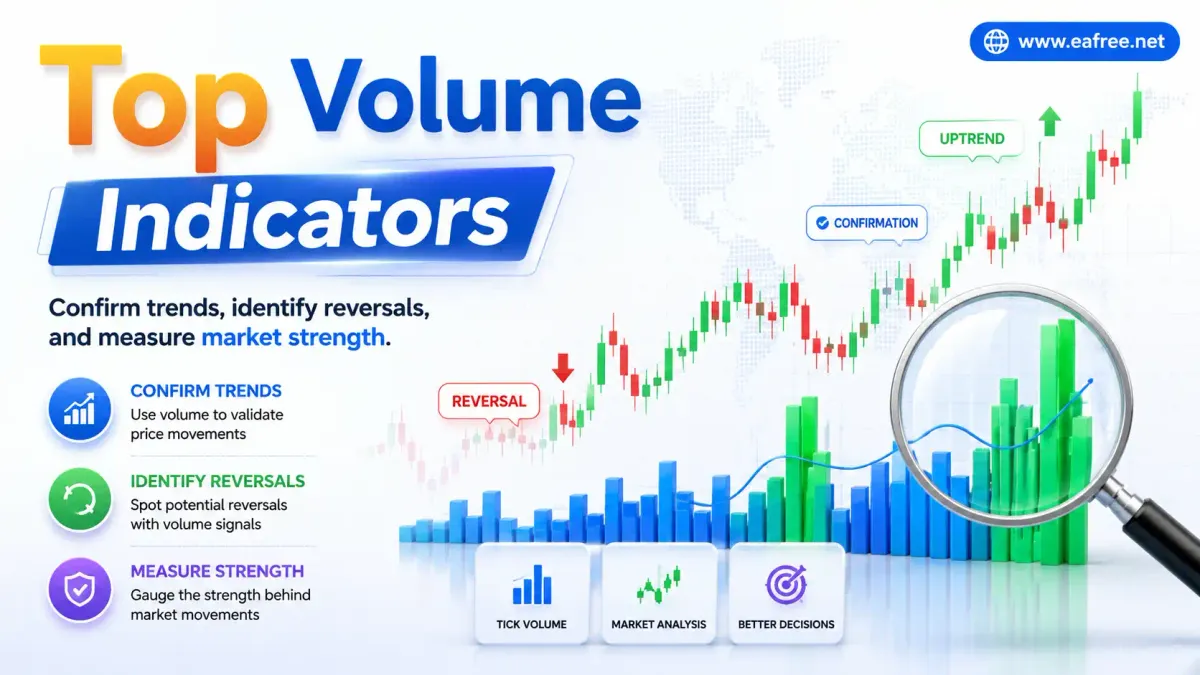
In the fast-moving Forex market, price action alone is often not enough to make informed trading decisions. Professional traders use volume indicators to confirm trends, identify reversals and measure market strength. While Forex trading is decentralized and does not provide centralized exchange volume like stocks, modern trading platforms still offer reliable tick volume data that traders can use effectively.
In 2026, volume analysis continues to play a critical role in technical trading strategies. Whether you are a beginner or an experienced trader, understanding the best volume indicators can significantly improve your market timing and overall trading performance.
Why Volume Indicators Matter in Forex Trading
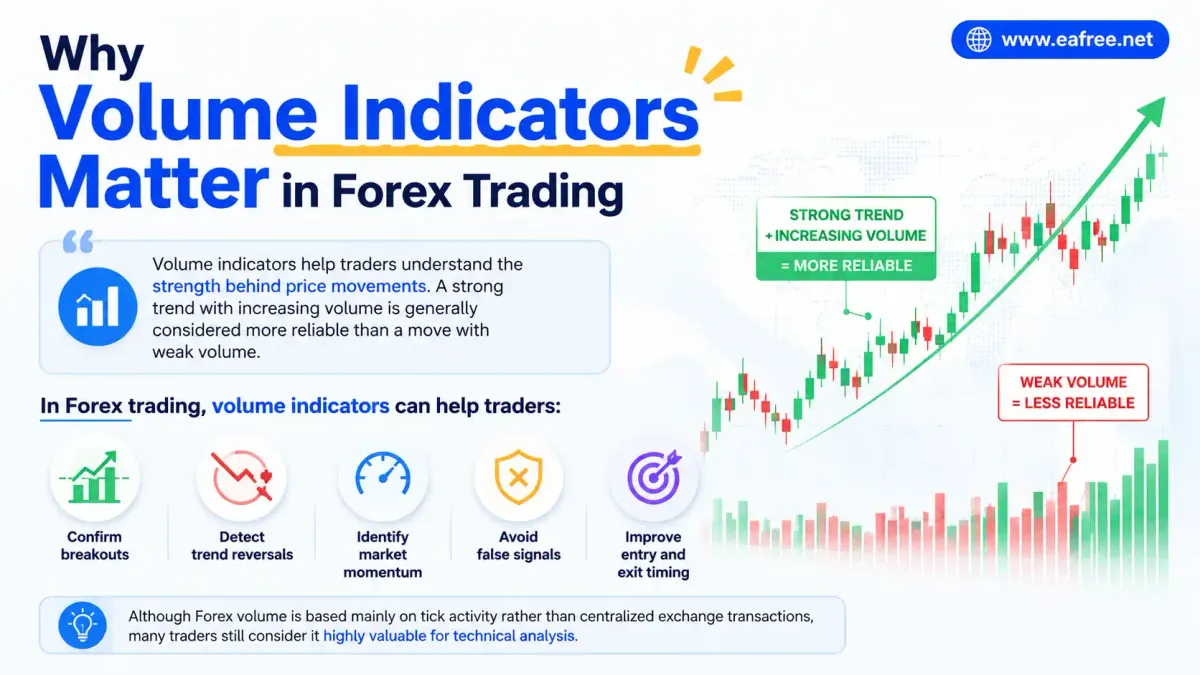
Volume indicators help traders understand the strength behind price movements. A strong trend with increasing volume is generally considered more reliable than a move with weak volume.
In Forex trading, volume indicators can help traders:
- Confirm breakouts
- Detect trend reversals
- Identify market momentum
- Avoid false signals
- Improve entry and exit timing
Although Forex volume is based mainly on tick activity rather than centralized exchange transactions, many traders still consider it highly valuable for technical analysis.
What is Tick Volume in Forex?
Unlike stock markets, Forex operates through a decentralized network of banks and liquidity providers. Because of this, there is no official centralized volume figure.
Tick volume measures how many times the price changes during a specific period. Higher tick volume usually indicates increased market participation and volatility.
Most modern Forex brokers and platforms such as MetaTrader and TradingView provide tick volume data that traders can analyze using various indicators.

Top Volume Indicators for Forex Traders in 2026
//1. On-Balance Volume (OBV)
The On-Balance Volume indicator is one of the most popular tools for measuring buying and selling pressure.
OBV tracks whether volume is flowing into or out of the market. When the indicator rises together with price, it often confirms a strong bullish trend. On the other hand, if price rises while OBV declines, it may signal weakening momentum and a possible reversal.
Best used for:
- Trend confirmation
- Divergence analysis
- Breakout validation
//2. Volume Weighted Average Price (VWAP)
VWAP is widely used by traders to determine the average market price based on both price and volume activity.
Forex traders often use VWAP to identify fair market value and institutional trading zones. When price remains above VWAP, bullish momentum is usually stronger. If price trades below VWAP, bearish pressure may dominate the market.
Advantages of VWAP:
- Helps identify trend direction
- Useful for intraday trading
- Popular among institutional traders
//3. Accumulation/Distribution Line (A/D Line)
The Accumulation/Distribution indicator measures the flow of money into and out of an asset.
This indicator compares price movement with volume to determine whether traders are accumulating positions or distributing them. If the A/D line rises while price also rises, the trend is considered healthy. Divergence between price and the indicator may indicate a reversal.
Best used for:
- Spotting hidden buying pressure
- Identifying divergence
- Trend analysis
//4. Chaikin Money Flow (CMF)
Chaikin Money Flow combines price and volume to measure buying and selling pressure over time.
A positive CMF value suggests strong buying pressure, while a negative value indicates stronger selling pressure. Many Forex traders use CMF together with support and resistance analysis to improve trading accuracy.
Why traders like CMF:
- Easy to interpret
- Good for momentum analysis
- Works well with trend-following strategies
//5. Money Flow Index (MFI)
The Money Flow Index is often called the “volume-weighted RSI” because it combines price and volume data.
MFI helps traders identify overbought and oversold market conditions. High readings may suggest the market is overbought, while low readings can indicate oversold conditions and potential reversal opportunities.
Ideal for:
- Reversal trading
- Momentum analysis
- Swing trading setups
Comparison Table of Top Forex Volume Indicators
| Indicator | Main Purpose | Best For | Difficulty Level |
|---|---|---|---|
| OBV | Trend confirmation | Breakouts & divergence | Easy |
| VWAP | Fair value analysis | Intraday trading | Medium |
| A/D Line | Money flow tracking | Trend strength | Medium |
| CMF | Buying/selling pressure | Momentum trading | Easy |
| MFI | Overbought/oversold signals | Reversal trading | Easy |
How to Use Volume Indicators Effectively
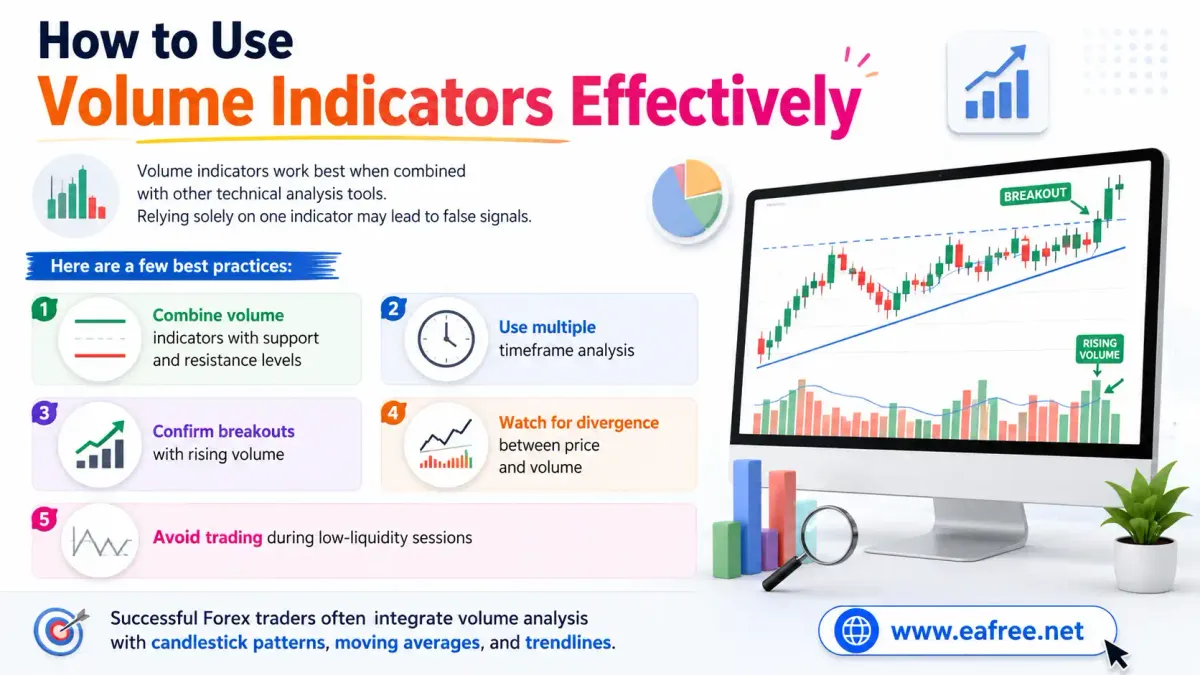
Volume indicators work best when combined with other technical analysis tools. Relying solely on one indicator may lead to false signals.
Here are a few best practices:
- Combine volume indicators with support and resistance levels
- Use multiple timeframe analysis
- Confirm breakouts with rising volume
- Watch for divergence between price and volume
- Avoid trading during low-liquidity sessions
Successful Forex traders often integrate volume analysis with candlestick patterns, moving averages and trendlines.
Common Mistakes Traders Make with Volume Indicators
Many beginner traders misuse volume indicators by treating them as standalone signals.
Some common mistakes include:
- Ignoring market context
- Using too many indicators at once
- Trading every divergence signal
- Overlooking major news events
- Misinterpreting low-volume periods
Understanding the limitations of Forex volume data is just as important as understanding its benefits.
Final Thoughts
Volume indicators remain essential tools for Forex traders in 2026. They provide valuable insights into market participation, momentum and trend strength. Indicators such as OBV, VWAP, CMF, A/D Line, and MFI can help traders make smarter and more confident decisions.
No indicator guarantees success, but combining volume analysis with solid risk management and technical strategies can improve trading consistency over time.
If you want to gain a deeper understanding of market behavior, mastering volume indicators is an excellent place to start.
FAQs
❓ Which volume indicator is best for Forex trading?
OBV and VWAP are among the most popular Forex volume indicators because they help confirm trends and identify institutional activity.
❓ Do volume indicators work in Forex markets?
Yes. Even though Forex uses tick volume instead of centralized exchange volume, many traders find volume indicators highly effective.
❓ Can beginners use volume indicators?
Absolutely. Indicators like OBV and MFI are beginner-friendly and relatively easy to understand.
❓ What is the difference between volume and tick volume?
Traditional volume measures actual traded contracts or shares, while tick volume measures how often price changes occur.
❓ Should I use volume indicators alone?
No. Volume indicators work best when combined with other technical analysis tools such as trendlines, moving averages, and support/resistance zones.