
What Is a Trailing Stop?
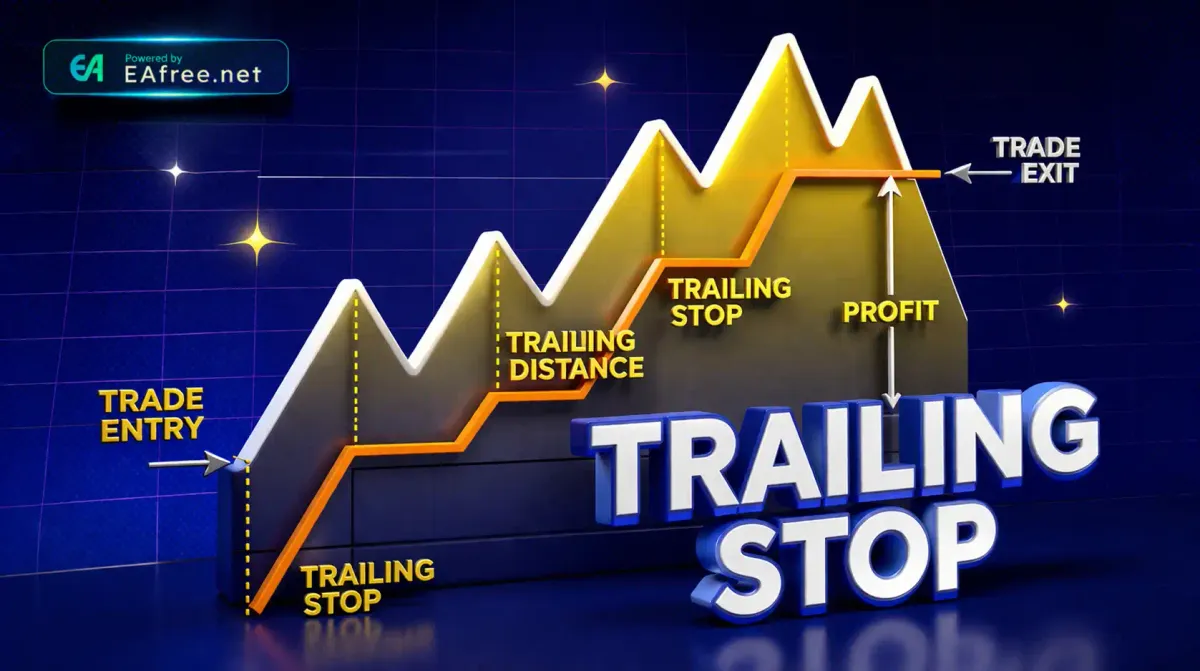
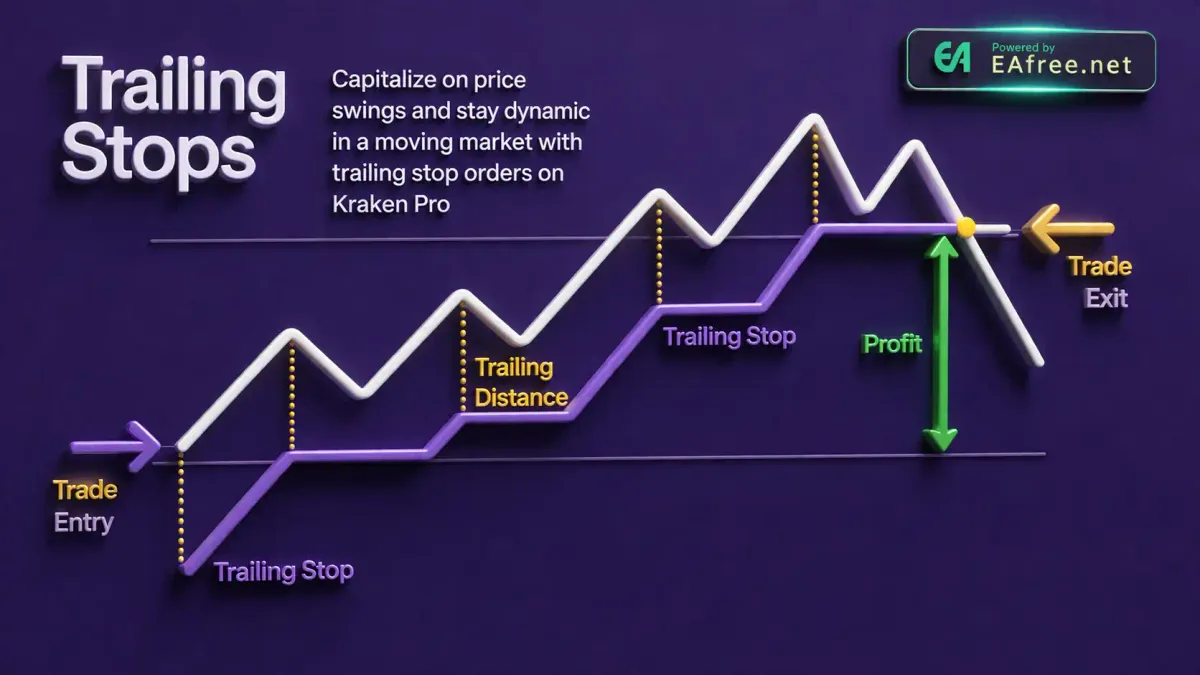
A trailing stop is a dynamic stop-loss order that automatically adjusts as the price of an asset moves in your favor. Unlike a traditional stop-loss—which stays fixed at a specific price level—a trailing stop “follows” the market price at a set distance.
//Example:
- You buy a stock at $100
- You set a trailing stop of 10%
- If the price rises to $120, your stop moves up to $108
- If the price then drops to $108, the position is automatically sold
The key idea: it locks in profits while still allowing room for growth.
How Trailing Stops Work
Trailing stops are typically set as either:
- A percentage (e.g., 5%, 10%)
- A fixed amount (e.g., $2, $5)
//Step-by-step process:
- You enter a trade
- You define your trailing distance
- The stop price moves as the asset price increases
- If the price reverses by the trailing amount, the order is triggered
Importantly, trailing stops only move in one direction:
- Upward for long positions
- Downward for short positions
They do not move backward, which ensures profits are progressively protected.
Why Trailing Stops Matter
Trailing stops solve a common problem traders face:
“When should I exit a winning trade?”
Without a strategy, traders often:
- Sell too early and miss gains
- Hold too long and lose profits
Trailing stops provide a structured, emotion-free solution.
Key Benefits of Trailing Stops
//1. Protecting Profits Automatically
As your trade becomes profitable, the stop adjusts upward, locking in gains without manual intervention.
//2. Removing Emotional Decision-Making
Fear and greed are major drivers of poor trading decisions. Trailing stops enforce discipline.
//3. Letting Winners Run
Unlike fixed targets, trailing stops allow you to stay in a trade as long as the trend continues.
//4. Reducing Monitoring Time
You don’t need to constantly watch the market—your exit strategy is automated.
Trailing Stop vs Stop-Loss
| Feature | Stop-Loss | Trailing Stop |
|---|---|---|
| Movement | Fixed | Dynamic |
| Profit Protection | Limited | High |
| Flexibility | Low | High |
| Automation | Partial | Full |
A traditional stop-loss is useful for risk control, while a trailing stop adds profit optimization.
Types of Trailing Stops
//1. Percentage-Based Trailing Stop
- Moves based on a percentage of price
- Best for volatile assets
Example: 10% trailing stop on a stock
//2. Fixed Amount Trailing Stop
- Moves by a fixed dollar amount
- Suitable for stable markets
Example: $2 trailing stop
//3. Indicator-Based Trailing Stop
Advanced traders use technical indicators such as:
- Moving averages
- ATR (Average True Range)
- Support/resistance levels
These allow more adaptive trailing strategies.
How to Choose the Right Trailing Stop
Choosing the correct trailing distance is critical. Too tight, and you’ll exit prematurely. Too wide, and you risk losing profits.
//Consider the following:
- Market Volatility
- High volatility → wider trailing stop
- Low volatility → tighter trailing stop
- Trading Style
- Day trading → tighter stops
- Swing trading → moderate
- Long-term investing → wider stops
- Asset Type
- Crypto → very wide (10–20% or more)
- Stocks → moderate (5–10%)
- Forex → tighter (1–3%)
Practical Examples
//Example 1: Stock Trade
- Buy at $50
- Trailing stop: $5
- Price rises to $70 → stop moves to $65
- Price drops to $65 → trade closes
- Profit: $15/share
//Example 2: Crypto Trade
- Buy Bitcoin at $30,000
- Trailing stop: 10%
- Price rises to $40,000 → stop at $36,000
- Market drops → exit at $36,000
- Profit secured despite volatility
Common Mistakes to Avoid
//1. Setting Stops Too Tight
Small price fluctuations can trigger early exits, especially in volatile markets.
//2. Ignoring Market Conditions
A one-size-fits-all trailing stop doesn’t work across different assets or environments.
//3. Not Using Stops at All
Many traders avoid stop mechanisms, exposing themselves to unnecessary risk.
//4. Over-Optimizing
Constantly adjusting trailing stops based on short-term movements defeats their purpose.
Advanced Strategies Using Trailing Stops
//1. Scaling Out with Trailing Stops
Sell part of your position while trailing the rest:
- Lock in partial profits
- Keep exposure for further gains
//2. Combining with Technical Analysis
Use trailing stops alongside:
- Trendlines
- Moving averages
- Breakout levels
This increases accuracy and reduces false exits.
//3. ATR-Based Trailing Stop
ATR measures volatility. A common strategy:
- Trailing stop = 2 × ATR
This adapts dynamically to market conditions.
When Not to Use Trailing Stops
Trailing stops are powerful, but not always ideal.
//Avoid using them in:
- Sideways markets (frequent false triggers)
- Highly manipulated assets
- Low-liquidity markets
In such cases, manual exits or wider stops may be more effective.
Psychological Advantages
Trailing stops aren’t just technical tools—they also improve trader psychology.
//They help you:
- Avoid panic selling
- Stick to a plan
- Reduce stress
- Build consistency
Trading success often depends more on discipline than strategy, and trailing stops reinforce both.
Tools and Platforms Supporting Trailing Stops
Most modern trading platforms support trailing stops, including:
- Stock brokers
- Forex platforms
- Crypto exchanges
However, features may vary:
- Some require manual setup
- Others offer automated trailing functionality
Always test how your platform handles trailing stops before trading live.
Final Thoughts
Trailing stops are one of the most effective tools for managing trades intelligently. They allow you to protect profits, minimize risk, and remove emotional bias—all while staying aligned with market trends.
To summarize:
- Trailing stops move with the market
- They lock in profits automatically
- They reduce emotional decision-making
- They must be tailored to your strategy and market conditions
If used correctly, trailing stops can significantly improve your trading performance and help you develop a more disciplined, professional approach.