
What is Break-Even?
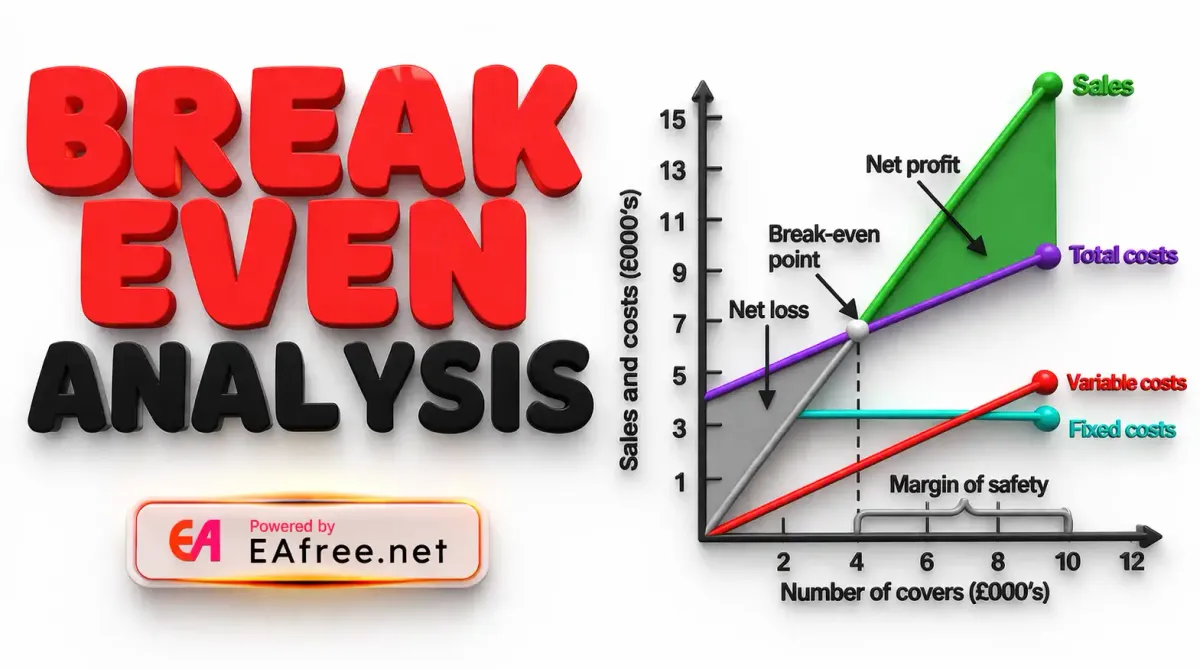
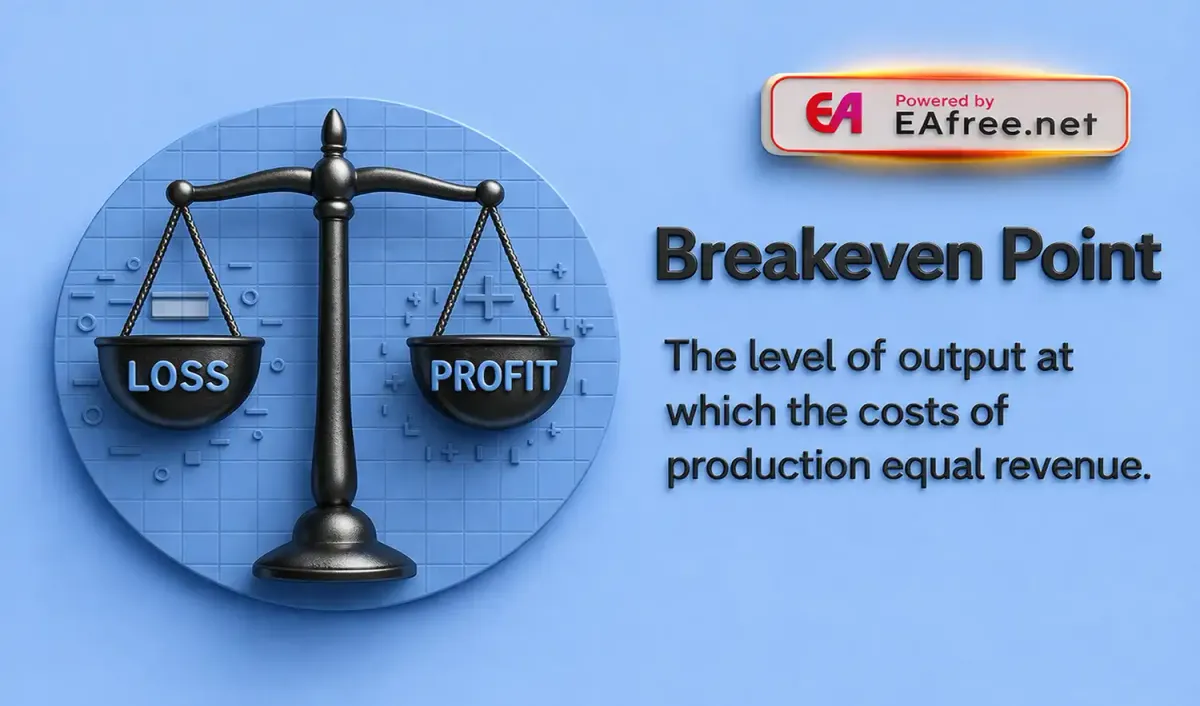
The Break-even point (BEP) is the moment when your total revenue equals your total costs. At this stage, your business is neither making a profit nor incurring a loss—it is simply "breaking even."
In simpler terms, break-even answers this critical question:
How much do I need to sell to cover all my costs?
Once you surpass this point, every additional sale contributes directly to profit.
Why is Break-Even Important?
Understanding break-even is crucial for several reasons:
//1. Financial Planning
Break-even helps you estimate how much revenue you need to stay afloat. This is especially useful when starting a new business or launching a product.
//2. Pricing Strategy
It helps determine whether your pricing is sustainable. If your break-even point is too high, you may need to increase prices or reduce costs.
//3. Risk Assessment
Knowing your break-even point allows you to evaluate the risks of a business decision, such as expanding operations or investing in new equipment.
//4. Goal Setting
It provides a clear, measurable target for your sales team and helps track performance.
Key Components of Break-Even Analysis
To understand break-even, you need to know three main components:
//1. Fixed Costs
These are expenses that do not change regardless of how much you produce or sell. Examples include:
- Rent
- Salaries
- Insurance
- Utilities (in some cases)
//2. Variable Costs
These costs vary depending on your production or sales volume. Examples include:
- Raw materials
- Packaging
- Shipping
- Sales commissions
//3. Selling Price per Unit
This is the price at which you sell each product or service.
The Break-Even Formula
The basic formula for calculating the break-even point in units is:
Break-Even Point (Units) = Fixed Costs ÷ (Selling Price per Unit − Variable Cost per Unit)
This formula tells you how many units you need to sell to cover all your costs.
Example of Break-Even Calculation
Let’s say you run a small business selling handmade candles:
- Fixed Costs: $1,000/month
- Selling Price per Candle: $20
- Variable Cost per Candle: $8
//Step 1: Calculate Contribution Margin
Contribution Margin = Selling Price − Variable Cost
= $20 − $8 = $12
//Step 2: Calculate Break-Even Point
Break-Even Point = $1,000 ÷ $12 ≈ 84 candles
So, you need to sell 84 candles per month to break even.
Break-Even in Revenue Terms
You can also calculate break-even in terms of revenue instead of units:
Break-Even Revenue = Fixed Costs ÷ Contribution Margin Ratio
Where:
Contribution Margin Ratio = (Selling Price − Variable Cost) ÷ Selling Price
Using the candle example:
- Contribution Margin Ratio = $12 ÷ $20 = 0.6
- Break-Even Revenue = $1,000 ÷ 0.6 = $1,667
So, you need $1,667 in sales to break even.
Visualizing Break-Even
A break-even chart is a powerful way to visualize your business performance:
- The X-axis represents the number of units sold
- The Y-axis represents costs and revenue
- The point where total revenue intersects total cost is the break-even point
This visual tool helps you quickly understand how changes in costs or pricing affect profitability.
Factors That Affect Break-Even Point
Several factors can influence your break-even point:
//1. Pricing Changes
Increasing your selling price reduces the number of units needed to break even.
//2. Cost Structure
Lowering fixed or variable costs helps you reach break-even faster.
//3. Sales Volume
Higher sales volumes can spread fixed costs over more units, improving profitability.
//4. Product Mix
If you sell multiple products, your break-even point depends on the mix of those products.
Advantages of Break-Even Analysis
Break-even analysis offers several benefits:
- Simple to understand and calculate
- Helps in decision-making
- Provides clear financial targets
- Useful for budgeting and forecasting
Limitations of Break-Even Analysis
While useful, break-even analysis has some limitations:
//1. Assumes Constant Prices and Costs
In reality, costs and prices may fluctuate over time.
//2. Ignores Market Demand
Just because you need to sell a certain number of units doesn’t mean the market will support it.
//3. Simplifies Complex Businesses
Businesses with multiple products or revenue streams may find break-even analysis less accurate.
How to Lower Your Break-Even Point
If your break-even point is too high, consider these strategies:
//1. Reduce Fixed Costs
- Negotiate rent
- Outsource non-essential tasks
- Use shared workspaces
//2. Lower Variable Costs
- Find cheaper suppliers
- Improve production efficiency
- Buy in bulk
//3. Increase Prices
- Add value to justify higher pricing
- Target premium customers
//4. Boost Sales Volume
- Improve marketing efforts
- Expand distribution channels
- Offer promotions
Break-Even vs Profit
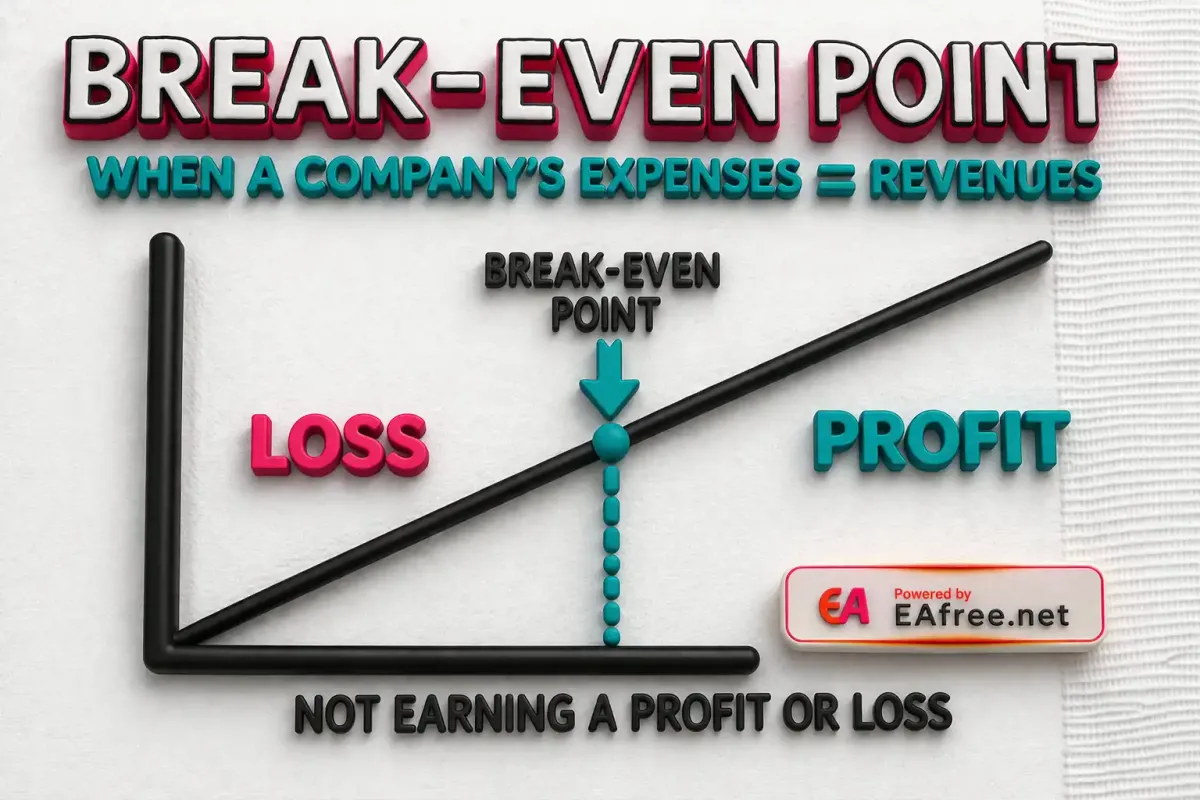
It’s important to distinguish between break-even and profit:
- Break-Even: Revenue = Costs
- Profit: Revenue > Costs
Once you pass the break-even point, your business starts generating profit. The further you move beyond this point, the higher your profit potential.
Real-World Applications of Break-Even
Break-even analysis is used in many real-world scenarios:
//1. Starting a Business
Entrepreneurs use it to determine whether their business idea is financially viable.
//2. Launching a New Product
Companies analyze how many units they must sell to recover development and marketing costs.
//3. Investment Decisions
Investors evaluate how long it will take for a business to become profitable.
//4. Pricing Decisions
Businesses adjust pricing strategies based on break-even calculations.
Tips for Beginners
If you’re new to break-even analysis, keep these tips in mind:
- Start with accurate cost data.
- Update your calculations regularly.
- Use simple tools like spreadsheets.
- Combine break-even analysis with other financial metrics.
Conclusion
Break-even analysis is a powerful tool that helps you understand the financial health of your business. By knowing exactly how much you need to sell to cover your costs, you can make better decisions, reduce risks and set realistic goals.
Whether you're just starting out or looking to optimize an existing business, mastering the concept of break-even will give you a strong foundation for financial success.