
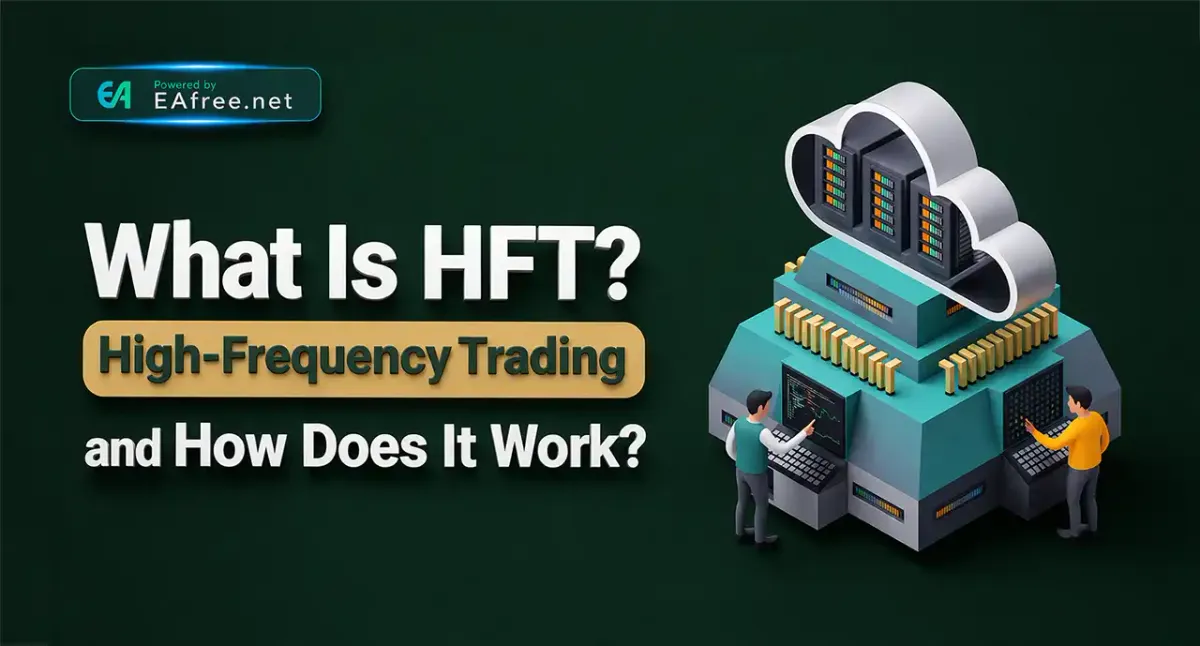
What Is High-Frequency Trading (HFT)?
High-Frequency Trading is a type of algorithmic trading that uses powerful computers and advanced mathematical models to execute a large number of orders at extremely high speeds.
Unlike traditional trading, where decisions may take minutes or hours, HFT operates in microseconds. These systems automatically analyze market data, identify opportunities, and execute trades almost instantly — often faster than human perception.
//Key Characteristics of HFT:
- Ultra-low latency execution.
- High turnover rates.
- Short holding periods (often seconds or less).
- Use of complex algorithms.
- Heavy reliance on data and infrastructure.
How High-Frequency Trading Works
At its core, HFT combines three main components: technology, data and strategy.
//1. Advanced Technology Infrastructure
HFT firms invest heavily in state-of-the-art hardware and networking systems. This includes:
- High-performance servers
- Direct market access (DMA)
- Fiber-optic and microwave transmission lines
Some firms even place their servers physically close to exchange data centers — a practice known as co-location — to reduce latency by mere microseconds.
//2. Real-Time Market Data Analysis
HFT systems constantly process vast amounts of market data, including:
- Price movements
- Order book dynamics
- Trading volumes
- News and economic indicators
Using this data, algorithms identify patterns and inefficiencies that can be exploited for profit.
//3. Algorithmic Execution
Once an opportunity is detected, algorithms automatically execute trades. These trades are typically:
- Very short-term
- High in frequency
- Low in individual profit margins
However, profits accumulate through volume and speed.
Common HFT Strategies
High-Frequency Trading isn’t just about speed — it’s also about strategy. Here are some of the most common approaches:
//1. Market Making
HFT firms act as market makers by continuously placing buy and sell orders. They profit from the bid-ask spread, earning small margins on each transaction.
//2. Arbitrage
Arbitrage involves exploiting price differences between markets or instruments. For example:
- Cross-exchange arbitrage
- Statistical arbitrage
- Latency arbitrage
HFT systems can detect and act on these discrepancies almost instantly.
//3. Momentum Ignition
This strategy attempts to trigger rapid price movements by placing a series of trades, encouraging other market participants to follow the trend.
//4. Event-Based Trading
Algorithms react to news events, earnings reports, or macroeconomic data releases within milliseconds, executing trades before human traders can respond.
The Role of Speed in HFT
Speed is the defining factor in High-Frequency Trading. Even a delay of a few microseconds can mean missed opportunities or losses.
To achieve maximum speed, firms focus on:
- Minimizing network latency
- Optimizing code efficiency
- Using specialized hardware (e.g., FPGAs)
In HFT, being faster than competitors often determines profitability.
Benefits of High-Frequency Trading
Despite its complexity, HFT offers several advantages to financial markets:
//1. Increased Liquidity
HFT firms provide continuous buy and sell orders, making it easier for investors to enter and exit positions.
//2. Tighter Bid-Ask Spreads
Competition among HFT firms often leads to narrower spreads, reducing transaction costs for traders.
//3. Improved Market Efficiency
By quickly correcting price discrepancies, HFT helps ensure that prices reflect available information more accurately.
//4. Enhanced Price Discovery
Rapid trading activity contributes to more efficient price formation across markets.
Risks and Criticisms of HFT
While HFT has benefits, it also raises concerns among regulators and market participants.
//1. Market Volatility
Some critics argue that HFT can amplify short-term volatility, especially during periods of market stress.
//2. Flash Crashes
One of the most notable incidents was the 2010 Flash Crash, where markets plunged dramatically within minutes before quickly recovering. HFT was widely scrutinized for its role.
//3. Unequal Playing Field
Retail investors and slower institutional traders may be at a disadvantage compared to HFT firms with superior technology.
//4. Market Manipulation Risks
Certain strategies, such as spoofing (placing fake orders to influence prices), have led to regulatory crackdowns.
Regulation of High-Frequency Trading
Governments and financial regulators worldwide have introduced measures to oversee HFT activities.
//Common Regulatory Approaches:
- Circuit breakers to halt trading during extreme volatility
- Monitoring of algorithmic behavior
- Restrictions on certain trading practices
- Requirements for transparency and reporting
Regulators aim to balance innovation with market stability and fairness.
The Technology Behind HFT
HFT relies on a combination of cutting-edge technologies:
//1. Artificial Intelligence and Machine Learning
Modern HFT systems increasingly use AI to:
- Improve prediction accuracy
- Adapt to changing market conditions
- Optimize trading strategies
//2. Big Data Analytics
Processing massive datasets allows firms to identify subtle patterns and correlations.
//3. Cloud Computing and Edge Computing
While latency-sensitive operations remain on-premises, cloud infrastructure supports data analysis and backtesting.
HFT vs Traditional Trading
| Feature | HFT | Traditional Trading |
|---|---|---|
| Speed | Microseconds | Seconds to hours |
| Trade Volume | Extremely high | Moderate |
| Holding Period | Very short | Longer-term |
| Decision Making | Algorithm-driven | Human-driven |
| Infrastructure Cost | Very high | Lower |
The Future of High-Frequency Trading
HFT continues to evolve alongside technology and market structure.
//Emerging Trends:
- Integration of quantum computing (experimental)
- Greater use of AI-driven strategies
- Expansion into cryptocurrency markets
- Increased regulatory scrutiny
As markets become more digital and interconnected, HFT is likely to remain a dominant force.
Is High-Frequency Trading Good or Bad?
The answer depends on perspective.
- Proponents argue that HFT improves liquidity, efficiency, and market quality.
- Critics believe it creates unfair advantages and systemic risks.
In reality, HFT is a complex phenomenon with both positive and negative impacts. Its role in modern markets reflects the broader tension between innovation and regulation.
Conclusion
High-Frequency Trading represents the intersection of finance and technology at its most advanced level. By executing trades at lightning speed, HFT firms have reshaped how markets operate, influencing liquidity, pricing and competition.
Understanding how HFT works is essential for anyone interested in modern finance — whether you’re an investor, trader or simply curious about the forces driving today’s markets.
As technology continues to advance, HFT will undoubtedly evolve, raising new opportunities, challenges and questions about the future of global financial systems.